
Creator
  • Type:
  • Genre:
  • Duration:
  • Average Rating:
Log In
 
  • Marketplace
Log In
 
  • Type:
  • Genre:
  • Duration:
  • Average Rating:
  • Marketplace

Finance

Gold Breaks $4,000 Barrier for the First Time as U.S. Shutdown Fears Ignite Global Rush to Safety

  • dollaers
  • October 8, 2025
  • Finance
  • 0 comments

Gold prices have surged to an unprecedented level, surpassing $4,000 per ounce for the first time in history, as investors scramble for safety amid deepening concerns over the U.S. government shutdown and the broader economic outlook.

The record-breaking rally underscores gold’s enduring reputation as the ultimate haven asset, marking a dramatic rise from below $2,000 just two years ago. With gains of over 50% in 2025 alone, the precious metal has far outpaced global equities and become one of the best-performing assets of the century.

Investor Anxiety Fuels the Rally

The latest spike in gold prices reflects a growing unease about Washington’s budget gridlock, renewed fears over U.S. fiscal health, and doubts about the Federal Reserve’s independence. The combination has rattled markets and pushed investors toward assets that promise stability when confidence in government and policy falters.

Financial analysts say the rally is part of a broader reallocation trend — investors shifting from overvalued technology stocks into tangible stores of value like gold. “Gold crossing $4,000 isn’t just a panic move — it’s a strategic rotation,” explained Charu Chanana, a strategist at Saxo Capital Markets. “With rate cuts approaching and real yields softening, gold is back at the center of global portfolios.”

Central Banks and ETFs Driving Demand

Another major factor behind the surge is aggressive buying by central banks, which have been increasing their gold reserves to reduce reliance on the U.S. dollar. The trend, already visible over the past two years, accelerated in 2025 as global geopolitical tensions deepened.

At the same time, retail investors and institutional funds have piled into gold-backed exchange-traded funds (ETFs). September recorded the largest monthly ETF inflows in more than three years, signaling renewed appetite for physical assets over paper-based investments.

Spot gold climbed as high as $4,026.69 an ounce on Wednesday afternoon in Singapore, before settling slightly lower at $4,025.86.

History Repeats in Times of Crisis

The latest milestone continues a long pattern of gold surging during times of global stress. The metal first broke $1,000 following the 2008 financial crisis, $2,000 during the 2020 pandemic, and $3,000 amid trade tensions and tariff disputes in 2022. Now, amid the 2025 U.S. government shutdown, it has reached $4,000, symbolizing yet another chapter in the metal’s crisis-driven trajectory.

The current rally, however, may be more complex than those before it. It’s fueled not only by fear, but also by structural shifts in global finance — including the weakening U.S. dollar, slowing economic growth, and the rise of emerging-market central banks diversifying away from traditional reserve currencies.

Fed Uncertainty and Political Pressure

Adding to market volatility is a wave of political pressure on the U.S. Federal Reserve. President Donald Trump’s latest criticism of the central bank, including reported threats toward Chair Jerome Powell and moves to replace Governor Lisa Cook, have raised questions about the Fed’s autonomy.

If the Fed becomes more compliant to political influence and cuts rates aggressively, analysts say it could trigger higher inflation — a scenario that would further support gold prices. “This is the perfect storm for bullion,” said one market analyst. “A weaker dollar, lower real yields, and political uncertainty are all colliding at once.”

The Outlook: Can Gold Go Higher?

With the Fed now easing monetary policy and bond yields trending lower, most traders expect the momentum to continue in the short term. However, some warn that the pace of the rally may invite profit-taking if geopolitical tensions ease or U.S. lawmakers reach a funding agreement soon.

Still, for many long-term investors, gold’s record run is a reminder of its timeless role as a safeguard against instability. As one trader put it, “Every financial era has its moment of reckoning — and when trust in institutions wavers, gold always shines the brightest.”

Lagos Teachers Earn Minimum of ₦150,000 Monthly – LASUED Vice-Chancellor Confirms

  • dollaers
  • October 7, 2025
  • Finance
  • 0 comments

The Vice-Chancellor of the Lagos State University of Education (LASUED), Professor Bidemi Lafiaji-Okuneye, has disclosed that no teacher in Lagos State earns less than ₦150,000 per month, reaffirming the state government’s commitment to prioritizing teachers’ welfare and motivation.

She made this revelation during an event themed “Recasting Teaching as a Collaborative Profession,” held at LASUED’s Ijanikin campus on Monday to commemorate the 2025 World Teachers’ Day. The event brought together educators, policymakers, and education stakeholders to reflect on the challenges and future of teaching in Nigeria.

Lagos State’s Commitment to Teachers’ Welfare

Professor Lafiaji-Okuneye emphasized that Lagos State has one of the most competitive salary structures for teachers in Nigeria, noting that the government has consistently implemented policies to enhance the dignity and motivation of educators.

“In Lagos State, I can tell you authoritatively that we are building our teachers’ world, and no teacher goes home with less than ₦150,000 in the state. But we can do better,” she stated.

The Vice-Chancellor underscored that fair remuneration remains critical to improving education quality. According to her, when teachers are undervalued, underpaid, and unsupported, it erodes morale, triggers brain drain, and reduces the attractiveness of the profession to talented young people.

The Link Between Teacher Welfare and Quality Education

Speaking further, Professor Lafiaji-Okuneye noted that the quality of education in any society is directly tied to how teachers are treated. She called for continuous reforms to raise the professional and financial status of educators, adding that well-motivated teachers produce better learning outcomes.

“When teachers are motivated, adequately trained, and empowered, they inspire excellence in students and build societies that can compete globally,” she said.

Challenges Facing the Teaching Profession

While celebrating teachers for their selfless service, the LASUED VC also highlighted lingering challenges within the profession. She pointed out that many teachers across Nigeria still face issues such as:

  • Poor working conditions and limited infrastructure.

  • Insufficient access to professional development opportunities.

  • Inadequate recognition from society.

She emphasized that addressing these problems is key to restoring pride in the teaching profession and ensuring long-term sustainability.

Call for Increased Investment in Education Infrastructure

Professor Lafiaji-Okuneye urged the Lagos State Government, in collaboration with TETFund and other education agencies, to allocate at least 20% of the state’s annual education budget toward upgrading classroom infrastructure.

She suggested that this funding should also cover the provision of digital learning tools, and the establishment of modern science and technology laboratories in public schools beginning from the 2026 fiscal year.

“Investment in modern classrooms and technology-driven education is essential for preparing both teachers and students for the future,” she added.

Recent Reforms in Teacher Development

At the federal level, efforts to professionalize and standardize teaching have also intensified. In August 2025, the Federal Ministry of Education launched a digital portal for teachers’ registration, licensing, and certification, managed under the Teachers Registration Council of Nigeria (TRCN).

Additionally, TRCN has streamlined its Professional Qualifying Examination (PQE) from 23 subjects to five key areas — foundational mathematics, literacy, pedagogy, digital literacy, and safeguarding — to make certification more focused and efficient.

According to the Minister of Education, Dr. Tunji Alausa, non-education graduates with at least 12 months of classroom experience can now obtain certification through an abridged NTI programme, designed to formalize and strengthen the nation’s teaching workforce.

Looking Ahead

The LASUED VC concluded her remarks by celebrating the dedication of teachers across Lagos and Nigeria, urging continued reforms and recognition for their critical role in shaping the nation’s future.

Her statement reinforces Lagos State’s reputation as a pacesetter in education reforms and teacher welfare, setting an example for other states to emulate as Nigeria works toward achieving sustainable education development and global competitiveness.

Nigeria Seeks $2 Billion Chinese Loan to Build National “Super Grid” for Reliable Power Supply

  • dollaers
  • October 7, 2025
  • Finance
  • 0 comments

Nigeria is currently in talks with China’s Export-Import Bank to secure a $2 billion loan aimed at financing a new “super grid” project that will transform the nation’s electricity transmission system. The initiative seeks to resolve Nigeria’s persistent power supply challenges and stimulate industrial growth by ensuring more stable and efficient electricity distribution nationwide.

Government’s Power Sector Vision

The Minister of Power, Adebayo Adelabu, announced the plan during an economic summit in Abuja, emphasizing that the new super grid will connect Nigeria’s eastern and western regions — areas that host the country’s largest industrial consumers. The project, he explained, is part of the federal government’s broader agenda to decentralize power generation and encourage industrial users who have disconnected from the unreliable national grid to return.

“This is part of our plan to decentralize power generation in Nigeria and get the heavy commercial users that left the grid due to unreliability to return,” Adelabu stated.

He further revealed that the Federal Executive Council (FEC) has already approved financing for the project, underscoring its priority status within President Bola Tinubu’s economic reform agenda.

Why Nigeria Needs a Super Grid

Nigeria’s fragile power infrastructure has long been a major constraint on economic productivity. Despite an installed generation capacity of about 13 gigawatts, only a fraction—approximately 4 gigawatts—is typically delivered to consumers across a population exceeding 200 million.

For comparison, South Africa, with just a quarter of Nigeria’s population, boasts an installed capacity of around 70 gigawatts. This stark contrast highlights the scale of Nigeria’s power deficit.

The unreliability of the grid has forced many industries and households to generate their own power, often through diesel and gas generators, which account for nearly half of the electricity consumed nationwide. The proposed super grid aims to modernize transmission infrastructure, improve efficiency, and expand power access to industrial clusters.

Boosting Industrial Productivity and Energy Access

Adelabu explained that the new super grid will not only reduce transmission losses but also ensure more power reaches industrial zones, supporting the government’s goal of boosting local manufacturing and reducing operational costs for businesses.

The initiative aligns with President Tinubu’s comprehensive economic reforms, which include:

  • Removing fuel subsidies to free up government revenue.

  • Reforming tax laws to encourage investment.

  • Enhancing oil production through improved security in the Niger Delta.

  • Stabilizing the financial sustainability of the power sector.

Improved Revenue from Tariff Adjustments

According to the Power Minister, recent tariff adjustments for urban consumers have started yielding results, increasing the sector’s revenue by 70% in 2024, with projections suggesting an additional 41% rise to N2.4 trillion ($1.6 billion) in 2025. These adjustments are intended to create a more financially viable electricity market that can attract private investment and support infrastructure upgrades like the super grid.

Nigeria’s Persistent Grid Collapse Problem

Despite multiple reform efforts, grid collapses remain a recurring issue in Nigeria’s power sector. Data from the Nigerian Electricity Regulatory Commission (NERC) shows that the national grid experienced several partial and total collapses in 2024, highlighting the sector’s vulnerability to technical and infrastructural faults.

In March 2024, widespread outages were reported after the national grid went down, plunging several states into darkness. A similar collapse occurred again in September, reinforcing the urgency for significant transmission system upgrades.

What Lies Ahead

The proposed $2 billion super grid project could mark a turning point in Nigeria’s decades-long struggle with unreliable electricity supply. If successfully executed, it is expected to:

  • Enhance power stability across the country.

  • Boost industrial output through reliable energy access.

  • Reduce dependence on self-generation and fossil fuels.

  • Encourage foreign and local investment in the energy sector.

As Nigeria seeks to industrialize and diversify its economy, improved electricity infrastructure remains a critical foundation for sustainable growth. The partnership with China’s Exim Bank—if finalized—could provide the necessary financing and technology to make the long-awaited transformation of Nigeria’s power sector a reality.

Africa Must Invest in AI to Protect Its Digital Future – Abasiama Idaresit

  • dollaers
  • October 7, 2025
  • Finance
  • 0 comments

The global artificial intelligence (AI) industry is projected to reach $4.8 trillion by 2033, according to the United Nations — a figure surpassing the combined GDP of all 54 African countries. With over $650 billion invested in AI in the past decade, the world’s fourth industrial revolution is accelerating rapidly.

Yet, as the digital divide widens, Africa risks being left behind. Technology entrepreneur Abasiama Idaresit, CEO of Wild Fusion Holdings, warns that without strategic investment in AI and data infrastructure, the continent could lose control of its digital sovereignty — and its future.

Africa’s Underinvestment in Data Infrastructure

Despite housing 17% of the world’s population, Africa accounts for just 1% of global digital infrastructure. This imbalance, Idaresit argues, leaves the continent vulnerable to digital colonization, biased algorithms, and economic dependency on external powers.

“Without consistent investment in data and AI systems, Africa will depend on others for the technology that shapes its destiny,” he explained. “That dependency will widen the poverty gap and drain economic value from the continent.”

AI, he noted, will soon power nearly every aspect of society — from healthcare and education to defence, agriculture, and creative industries. To secure its place in this future, Africa must invest now.

Turning Data into an Economic Asset

Idaresit urged African policymakers to treat data as the new oil — a resource that must be harnessed, not exported raw. Comparing data extraction to the export of unprocessed commodities, he warned that Africa could repeat the same historical mistakes if it doesn’t build capacity to refine and use its own data.

He emphasized that huge opportunities exist in the early stages of the AI value chain — particularly in data sourcing, labeling, cleaning, and preparation. These stages, often overlooked, are crucial for training accurate AI models and can generate billions in value.

“Data labeling alone is a $22.46 billion industry, growing at over 20% annually,” he said. “With Africa’s youthful population and competitive labor costs, we can capture a significant share of this market while ensuring diverse, representative datasets.”

African firms such as Lelapa and Sama already provide data annotation services for global AI companies — proof, he said, that the opportunity is real and scalable.

Building Digital Sovereignty and Inclusive AI

At the heart of Idaresit’s advocacy is digital sovereignty — the ability for nations to control their own data, protect intellectual property, and shape technologies that reflect their values.

“The core of AI is data accuracy,” he explained. “African companies that build precise and representative datasets are not just service providers; they are defenders of our technological independence.”

Speaking recently at a UN-backed AI for Developing Countries Conference in Vienna, Idaresit reiterated that Africa must define its digital destiny. “We missed the first three industrial revolutions. We cannot afford to miss the fourth,” he said.

A Call to Action for Policymakers and Investors

Across the continent, progress is emerging. The African Union has launched a continental AI strategy, and countries such as Nigeria, Kenya, Egypt, and South Africa are developing national AI frameworks.

Still, Idaresit insists that more must be done to attract both local and foreign investment. “Africa can — and must — become part of the global AI value chain,” he urged. “If we remain passive, we’ll face a future shaped by biased technologies that threaten our culture, economy, and identity.”

He concluded with a powerful reminder drawn from African wisdom:

“There is no beauty but the beauty of action.”

About Abasiama Idaresit

Abasiama Idaresit is the CEO of Wild Fusion Holdings, a technology and venture investment group with interests in digital banking, marketing, and training across Nigeria, Ghana, and Kenya. Recognized by the UN-backed MIPAD Top 100 and France’s Choiseul Institute’s Top 200 Under 40 Economic Leaders, he is a prominent advocate for digital inclusion and youth development.

Through his work with LEAP Africa, supported by Mastercard and the Gates Foundation, Idaresit continues to champion innovation, financial inclusion, and technology-driven progress across the continent.

Gold at Record Highs: Is Now the Right Time to Invest?

  • dollaers
  • October 4, 2025
  • Finance
  • 0 comments

Gold has always been seen as a timeless store of value. But in 2025, the precious metal has gone beyond its traditional appeal — it’s rewriting history. With global gold prices climbing past $3,700 per ounce, investors across the world, including Nigeria, are paying close attention.

The big question for most people now is: Should you invest in gold — and if so, how?


Why Gold Is Shining Brighter Than Ever

The surge in gold prices is being driven by a mix of global economic and political factors. Central banks are slowing interest rates, inflation remains stubborn in many major economies, and geopolitical tensions have intensified in parts of Europe and the Middle East.

In uncertain times like these, investors naturally turn to “safe haven” assets — and gold tops that list.

When currencies weaken or inflation rises, gold tends to maintain or even increase its value. It’s not dependent on the performance of any single economy, company, or government. That’s why, even as stock markets fluctuate, gold has gained more than 40% so far this year, marking dozens of new record highs.


Understanding Why Investors Buy Gold

Gold is prized for its stability. For centuries, it has served as a hedge against economic instability, inflation, and currency depreciation.

For Nigerian investors, gold also provides protection against the naira’s volatility. As the local currency fluctuates and inflation eats into savings, holding part of one’s portfolio in gold — whether directly or through financial products — can provide balance and long-term security.

Experts say this renewed surge in gold’s value isn’t just about market speculation. Central banks worldwide have been increasing their gold reserves, strengthening long-term demand and further supporting prices.


Ways to Invest in Gold

There are two main paths to gold investing: physical gold and paper gold (or gold-backed financial instruments). Each comes with distinct benefits and risks.

1. Physical Gold

This includes gold bars, coins, or jewelry.
Buying physical gold gives you direct ownership, but it’s not always practical. Storage, insurance, and security are significant concerns, especially for large amounts. Additionally, transaction costs and purity verification can reduce profits.

2. Gold ETFs and Mutual Funds

A more convenient method is to invest in gold exchange-traded funds (ETFs). These funds track the price of gold and allow investors to gain exposure without holding the metal physically.

Globally, funds like SPDR Gold Shares (GLD) and iShares Gold Trust (IAU) are among the most popular. Nigerian investors can gain indirect access through international trading platforms or mutual funds offered by some local investment houses that include commodities in their portfolio mix.

Gold ETFs are generally more liquid, transparent, and cost-efficient than buying bullion. They allow easy buying and selling like ordinary stocks and remove the burden of storage.

3. Gold Mining Stocks

Another option is investing in companies that mine or refine gold. However, mining stocks are tied more to corporate performance and operational risks than to gold prices alone. While they can provide higher returns, they also carry more volatility.


How Much Gold Should You Own?

Financial experts recommend that gold should form no more than 3–5% of your total portfolio. It’s best used as a diversifier, not a core holding.

The idea is simple — when markets fall, gold can help cushion losses. But overexposure may limit growth because gold doesn’t generate interest or dividends like other investments.


Final Thoughts

Gold’s meteoric rise is capturing headlines, but smart investing requires perspective. The metal’s long-term value lies in its ability to preserve wealth, not in short-term profits.

Before diving in, consider your risk tolerance, portfolio mix, and investment goals. Whether you choose physical gold, ETFs, or mining stocks, treat it as part of a balanced financial plan — not a get-rich-quick asset.

As one investment strategist put it, “Gold shines brightest not when markets are booming, but when uncertainty reigns.” For Nigerian investors navigating inflation and currency swings, that shine might be worth a second look.

Understanding How Financial Advisors in Nigeria Charge Their Clients

  • dollaers
  • October 4, 2025
  • Finance
  • 0 comments

When it comes to personal finance, many Nigerians are becoming more intentional about seeking professional guidance. But one key question often arises before hiring an advisor: “How do financial advisors make their money?”

Understanding this question is crucial because it helps you know what you’re paying for, avoid hidden costs, and ensure your advisor’s interests align with yours.


The Two Main Earning Models

Most financial advisors in Nigeria earn income through either commissions or fees — and sometimes a combination of both.

Each model comes with advantages and disadvantages, so knowing how your advisor is compensated helps you make informed choices.


1. Commission-Based Advisors

These advisors earn a commission each time they sell a financial product. This could be an insurance policy, a mutual fund, or investment-linked product from a bank or asset management company.

For instance, when an advisor from a firm like ARM, Stanbic IBTC, or Leadway sells you an insurance plan or investment product, they may receive a percentage of the transaction as payment.

Pros:

  • Commission-based advice can sometimes be free at the point of contact, making it more accessible for people who can’t afford upfront fees.

  • It’s convenient when you just need a specific product or one-time service.

Cons:

  • The model can create conflicts of interest. Some advisors may recommend products that earn them higher commissions rather than those that best suit your goals.

  • Certain products (like annuities or insurance policies) may come with long lock-in periods or exit penalties, which clients often overlook.


2. Fee-Based Advisors

Fee-based advisors charge clients directly for their time or expertise. This model is becoming more popular in Nigeria, especially among independent financial planners and wealth managers registered with the Securities and Exchange Commission (SEC).

There are different types of fees within this model:

  • Flat Fees: You pay a fixed amount annually or monthly for ongoing advice.

  • Hourly or Per-Session Fees: Ideal for people who just need help with budgeting, investment planning, or retirement strategy.

  • Assets Under Management (AUM) Fees: The advisor charges a small percentage (usually around 1%) of the money they manage for you each year.

Pros:

  • Transparent and easy to understand — you know exactly what you’re paying for.

  • Reduces conflicts of interest since your advisor’s income doesn’t depend on selling products.

  • Encourages a long-term advisory relationship focused on your financial goals.

Cons:

  • The cost may be higher for those with limited savings or low investment balances.

  • Some advisors focus only on clients with large portfolios, leaving middle-income earners underserved.


Choosing What Works for You

Before working with any advisor in Nigeria, ask these important questions:

  1. How are you compensated?

  2. Are you registered with the SEC or any professional body?

  3. Do you receive commissions for recommending certain products?

  4. What exactly does your service include — financial planning, investment advice, or both?

These questions help you identify whether the advisor’s incentives align with your best interests.


Final Thoughts

As Nigeria’s financial landscape evolves, transparency in advisory services is becoming more important. Whether you’re working with a bank-based advisor, a private planner, or an online investment coach, always understand how they get paid before committing.

Remember, a good advisor’s job isn’t just to sell products — it’s to guide you towards building sustainable wealth, reducing risks, and helping you make smarter money decisions.

Trump’s $100,000 H-1B Visa Fee Faces Legal Challenge from Unions and Employers

  • dollaers
  • October 4, 2025
  • Finance
  • 0 comments

A coalition of U.S. unions, universities, and business groups has filed a federal lawsuit challenging President Donald Trump’s recent executive order imposing a $100,000 fee on new H-1B visas for highly skilled foreign workers.

The legal action, filed in San Francisco federal court on Friday, marks the first major challenge to the controversial measure, which critics say unlawfully alters a congressionally established immigration program and threatens innovation in key U.S. industries.

Lawsuit Targets Trump’s Immigration Fee Order

The lawsuit, brought by the United Auto Workers (UAW), the American Association of University Professors (AAUP), a nurse recruitment agency, and several religious organizations, argues that the new rule exceeds presidential authority and effectively transforms the H-1B program into a “pay-to-play” system.

They contend that the Immigration and Nationality Act, which governs the H-1B program, does not give the president the power to impose new fees or taxes, a responsibility reserved for Congress.

“The Proclamation transforms the H-1B program into one where employers must either ‘pay to play’ or seek a ‘national interest’ exemption,” the lawsuit states, warning that the policy invites selective enforcement and potential corruption.

Trump’s $100,000 Visa Fee Explained

The executive order, signed on September 19, 2025, requires U.S. employers sponsoring new H-1B visa holders to pay an additional $100,000 before the foreign worker can enter the country. The policy does not apply to existing visa holders or applications filed before September 21.

Under current rules, H-1B sponsoring companies typically pay between $2,000 and $5,000 in processing and compliance fees, depending on their size and number of foreign hires.

The administration defended the steep new fee as part of a broader effort to discourage “system abuse” and to ensure that only firms with genuine skill shortages use the visa program.

White House spokeswoman Abigail Jackson said the policy aims to “discourage companies from spamming the system and driving down American wages, while providing certainty to employers who need to bring the best talent from overseas.”

A Longstanding Debate Over Skilled Immigration

The H-1B visa allows U.S. employers to hire foreign professionals in specialized fields, such as technology, engineering, medicine, and academia. The program currently allocates 65,000 visas annually, plus an additional 20,000 for applicants with advanced U.S. degrees.

Tech giants and universities have long relied on H-1B workers to fill skill gaps, particularly in science and engineering disciplines. However, critics — including labor advocates and some policymakers — argue that the system enables outsourcing firms to replace American workers with lower-paid foreign labor.

President Trump has repeatedly claimed that the program undermines U.S. workers and national security. In his latest proclamation, he cited “the large-scale replacement of American workers” and said the influx of lower-wage visa holders “discourages Americans from pursuing careers in science and technology.”

Legal Experts Question Presidential Authority

Legal analysts say the case could become a major test of the limits of executive power over immigration policy.

The plaintiffs argue that Trump’s order violates the U.S. Constitution’s separation of powers, asserting that the president cannot unilaterally impose financial obligations that effectively act as taxes or revenue measures.

They also claim that the Department of Homeland Security and State Department implemented new visa rules without proper regulatory procedures or consideration of the economic impact.

By bypassing formal rulemaking, the lawsuit says, the administration ignored the potential for “stifling innovation” in sectors that depend heavily on global talent.

Implications for U.S. Businesses and Global Talent

The new $100,000 fee could sharply curtail participation in the H-1B program, particularly among smaller firms and startups that depend on specialized international labor but lack the capital of large corporations.

Business coalitions have warned that the measure will make it harder for U.S. employers to remain competitive globally, especially in fields like artificial intelligence, software engineering, and healthcare, where skilled labor shortages persist.

According to government data, India accounts for about 71% of H-1B visa recipients each year, with China following at around 12%. The policy, therefore, could disproportionately affect Indian tech professionals and U.S. companies with large Indian workforces.

Broader Immigration Strategy

Trump’s executive order on H-1B visas was announced alongside the rollout of a new “Trump Gold Card,” which grants permanent residency to foreign nationals who invest $1 million in the United States. The two measures are part of a broader effort to reshape U.S. immigration policy to favor wealthy investors over skilled workers.

As the case moves forward, the outcome will likely determine how far the executive branch can go in restructuring employment-based immigration without congressional approval — a question that could have lasting implications for the future of America’s high-skilled workforce.

BOA Secures $1 Billion Afreximbank Partnership to Boost Nigeria’s Agricultural Financing

  • dollaers
  • October 4, 2025
  • Bank, Finance
  • 0 comments

The Bank of Agriculture (BOA) has entered into a landmark $1 billion financing partnership with the African Export-Import Bank (Afreximbank) to expand credit access and modernise the country’s agricultural sector, particularly for smallholder farmers.

The agreement was formalised during the recently concluded Intra-African Trade Fair (IATF) 2025 in Algiers, Algeria, and is designed to strengthen Nigeria’s agricultural value chain from production to processing and export.

Unlocking Capital for Smallholder Farmers

The initiative aims to provide direct financial support and equipment financing for smallholder farmers who currently contribute more than 90% of Nigeria’s agricultural output but face persistent challenges, including limited access to capital, outdated technology, and poor market integration.

“This is more than just a fund; it is a bold commitment to ensuring our nation’s food security,” said Ayo Sotinrin, the newly appointed Managing Director and Chief Executive Officer of BOA. “By joining forces with Afreximbank, we are unlocking opportunities for smallholder farmers to move beyond subsistence farming into sustainable and profitable agribusiness.”

Reducing Credit Risk Through Guarantees

Under the agreement, Afreximbank will provide loan guarantees for credit disbursed by BOA, reducing risk exposure and expanding financing to previously underserved farmers. The partnership also introduces a currency swap arrangement, converting Afreximbank’s dollar-denominated funds into local currency for lending — helping shield farmers from exchange rate volatility.

Both institutions said the framework will improve access to international capital markets while ensuring that financing remains stable and affordable for rural producers.

Supporting National Food Security Goals

The $1 billion programme aligns closely with President Bola Tinubu’s administration’s National Smallholder Farmers Fund, a new initiative that establishes a revolving food security fund in collaboration with state governments. The fund seeks to close Nigeria’s agricultural financing gap by offering affordable loans for inputs, mechanisation, and market development.

Transforming the Bank of Agriculture

The BOA, jointly owned by the Federal Ministry of Finance Incorporated and the Central Bank of Nigeria, is Nigeria’s primary development finance institution for agriculture and rural development. Established in 1972, the bank has a mandate to promote agricultural productivity, rural job creation, and financial inclusion.

The recent leadership change — with Sotinrin’s appointment by President Tinubu — is part of broader efforts to reposition BOA as a modern, technology-driven, and commercially viable agricultural finance institution capable of delivering large-scale impact.

Afreximbank’s Expanding Regional Role

Afreximbank, which co-organised the IATF alongside the African Union Commission and the African Continental Free Trade Area (AfCFTA) Secretariat, described the 2025 trade fair as its most successful to date. The event attracted over 112,000 participants both online and on-site and facilitated more than $48 billion in trade and investment deals across Africa.

According to Afreximbank, partnerships like the BOA agreement exemplify the kind of cross-border collaboration needed to realise the continent’s agricultural and trade potential.

A Step Toward Sustainable Agribusiness

For Nigeria, the deal signals renewed momentum in transforming agriculture into a commercially sustainable, technology-driven sector. With fresh leadership, international backing, and alignment with national policy goals, the Bank of Agriculture appears set to play a central role in financing the country’s next agricultural revolution.

What ₦50 Million Can Really Do for You in 2025

  • dollaers
  • October 4, 2025
  • Finance
  • 0 comments

Every few months, a familiar question resurfaces among young professionals in Nigeria: If you had ₦50 million in cash today, would you relocate abroad or invest at home?

It’s not a simple choice. ₦50 million, roughly $34,000, can either serve as a launchpad for a new life overseas or as seed capital for a business venture in Nigeria. But how far it goes depends entirely on how—and where—you use it.

What ₦50 Million Buys You Abroad

In many Western countries, $34,000 can buy you valuable time and options. It could cover tuition while you work part-time, help you buy a modest car outright, or serve as your emergency cushion while building a new life.

However, as financial analyst Kalu Aja points out, savings alone don’t last long in economies built on systems and steady income. Surviving solely on $34,000, or even $100,000, without a job or trade is unrealistic. The key is to convert that money into earning power—through certification, education, or a marketable skill.

Labour Is Gold in the West

In the West, labour commands high value. Aja illustrates this with a striking example: fixing a split air conditioning unit cost his friend $24,000—$2,200 for the unit itself, and a staggering $20,000 for labour.

Jobs often dismissed as “menial” in Nigeria—plumbing, electrical work, hairdressing, truck driving—can yield solid middle-class incomes abroad. Aja even jokes that it might be cheaper to fly a skilled technician from Aba to the US to do the repair.

The point is clear: Western economies reward skilled hands and certified expertise. Those who master a trade or get licensed can thrive quickly.

When the Problem Isn’t the Country—But the Career

Many Nigerians struggle abroad because their professional titles don’t translate. A banker from Ikoyi might discover that without Western certification, their skills don’t command the same value. Meanwhile, a plumber or auto mechanic can build a profitable small business within months.

That’s why Aja urges aspiring emigrants to first invest in skills at home—spending perhaps ₦1 million on apprenticeship or training—before relocating.

Smart Skills That Travel

According to Aja, valuable trades include:

  • Hairdressing

  • Teaching and childcare

  • Nursing

  • Information Technology

  • Plumbing, carpentry, and electrical work

  • Auto mechanics and truck driving

Professional certifications such as CFA, CFP, or CPA also add value for those seeking white-collar opportunities.

The Demographic Advantage

The West is aging fast. The U.S., for example, had 7.4 million job openings as of mid-2025. Countries with declining birth rates need young, skilled migrants to sustain their economies. Those who move legally, armed with relevant skills, are well-positioned to benefit.

Plan Before You Pack

Still, Aja cautions against emotional or impulsive relocation. Emigration requires structure—research, budgeting, and clear goals. He advises:

  • Move when you’re young and flexible.

  • Relocate as a couple without kids if possible.

  • Pursue education first, then employment.

  • Choose the U.S. over Canada, the EU, or the UK if economic opportunity is your focus.

The Bottom Line

Kalu Aja isn’t pushing anyone to leave or stay. His message is simple: if you decide to go, go prepared. Whether you invest your ₦50 million locally or abroad, the outcome depends less on geography and more on planning, adaptability, and skill.

In the end, the money isn’t the real advantage—you are.

Naira Strengthens to N1,455/$ as Market Confidence Builds

  • dollaers
  • October 3, 2025
  • Finance
  • 0 comments

Local Currency Records Strongest Rally of 2025

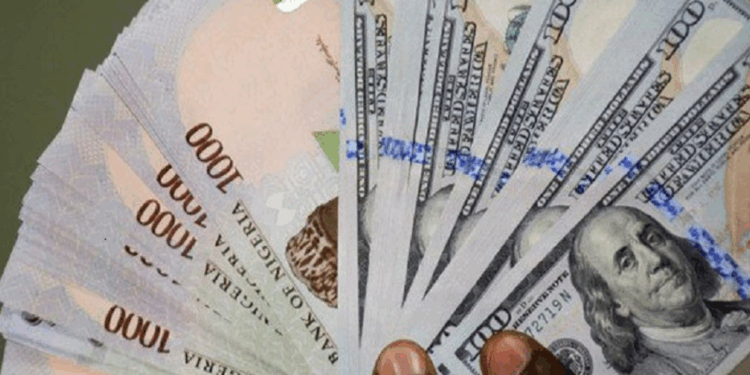
The naira appreciated to N1,455 per U.S. dollar in the official Nigerian Foreign Exchange Market (NFEM), extending its upward momentum and signaling renewed confidence in the domestic currency.

Trading data showed that while the official market closed at N1,455/$, parallel market rates hovered slightly higher at N1,460/$ to N1,470/$. This stability contrasts sharply with the sharp depreciations witnessed earlier in 2025, highlighting the positive effects of recent reforms and stronger capital inflows.

Analysts Credit Reforms and Rising Reserves

Market analysts point to multiple drivers behind the naira’s gains. Chief among them are reduced speculative activities in the FX market and an increase in Nigeria’s external reserves, which climbed to $43 billion in September from $40.51 billion two months earlier.

The Central Bank of Nigeria (CBN)’s policy reforms — including stricter FX regulations, interventions through authorized dealers, and inflows from International Oil Companies (IOCs) and Foreign Portfolio Investors (FPIs) — have boosted liquidity and tempered volatility.

Foreign investor confidence is also improving. With better adherence to FX rules and more transparent processes, portfolio inflows are rising, providing the market with much-needed support.

CBN Governor Reaffirms Strength in Fundamentals

CBN Governor Yemi Cardoso noted that gross external reserves remain strong with over eight months of import cover, signaling a solid buffer for future market pressures.

“In a similar vein, the current account balance for the second quarter of 2025 recorded a significant surplus of $5.28 billion, compared with $2.85 billion in the first quarter,” Cardoso added, emphasizing Nigeria’s improving external position.

The Governor also reaffirmed the apex bank’s commitment to sustaining reforms that ensure transparency, strengthen liquidity, and reduce reliance on speculative trading in the FX market.

Global Dollar Weakness Adds Tailwinds

The naira’s rally is being supported by global conditions as well. The U.S. Dollar Index (DXY), which measures the dollar against a basket of major currencies, slipped to 97.9, extending its bearish run.

This weakness comes as the U.S. economy faces uncertainty due to a federal government shutdown, which has delayed critical macroeconomic data such as the September Nonfarm Payrolls report. The shutdown has forced over 700,000 federal employees into potential furloughs, raising fiscal risks for Washington.

At the same time, weaker-than-expected U.S. labor market data has fueled speculation that the Federal Reserve may implement additional rate cuts before the end of the year. Markets are pricing in a 90% chance of a December cut, alongside a 25-basis-point reduction expected in October.

Outlook: Stability but Risks Remain

For Nigeria, the naira’s current strength reflects both improved domestic fundamentals and favorable external dynamics. However, analysts caution that sustaining the rally will require consistent reforms, stable oil revenues, and careful management of speculative demand.

If reserves continue to grow and foreign inflows remain steady, the currency could hold its ground into the final quarter of 2025. For now, the naira’s performance marks a significant shift from the turbulence seen earlier in the year and offers cautious optimism for businesses and investors alike.

  • ‹ Previous
  • 1
  • …
  • 14
  • 15
  • 16
  • 17
  • Next ›
Forgot Password
Please enter your email address or username below.
*
 
Login
*
*
Lost Your Password
Dont have account? Signup
 
 
0