
Creator
  • Type:
  • Genre:
  • Duration:
  • Average Rating:
Log In
 
  • Marketplace
Log In
 
  • Type:
  • Genre:
  • Duration:
  • Average Rating:
  • Marketplace

Business

Tech Career Roadmap

Drinks & Mics Episode 6: Inside the Debate on a Nigerian Version of “OnlyFans”

  • dollaers
  • October 13, 2025
  • Business
  • 0 comments

The sixth episode of Drinks & Mics brought together hosts Ugodre, Arnold Dublin-Green, Tunji Andrews, Otunba Deltoro, and special guest Seyi Akinwale for a lively conversation that blended finance, tech innovation, and bold business ideas shaping Nigeria’s economic scene.

A Controversial Investment Idea

The episode ignited immediate buzz when Arnold Dublin-Green revealed that he would consider investing in a Nigerian version of OnlyFans, the global subscription platform famous for its creator-driven model. His comment sparked laughter, debate, and curiosity among the crew.

Arnold explained that OnlyFans’ success lies in its multi-billion-dollar valuation and the huge earnings it generates for content creators worldwide. He argued that a localized version could serve as a Pan-African platform, offering opportunities for African creators to monetize exclusive content within a structured and safe environment.

The Creative Economy and Emerging Wealth

Co-host Tunji Andrews expanded on Arnold’s point, emphasizing how a new kind of wealth is emerging — one powered by digital creators, influencers, and online entrepreneurs. He cited examples of YouTubers earning up to $30,000 monthly, underscoring the financial potential within Africa’s fast-growing creator economy.

According to Tunji, platforms that empower young Africans to profit from their creativity could help tackle unemployment and diversify income streams beyond traditional jobs.

Arnold also praised OnlyFans’ controlled ecosystem, suggesting that a regulated African equivalent could offer both creative freedom and user protection, avoiding the platform’s more controversial aspects.

Global Markets and Gold’s Record Surge

The discussion then turned to the global economy, as the panel examined gold’s rise above $4,000 per ounce — a milestone reflecting global uncertainty and increasing demand by central banks.

Arnold pointed out that gold remains a safe-haven asset in times of volatility, while others noted the ripple effects on currencies and commodity markets.

Nigeria’s Economic Realities

Bringing the focus home, the team dissected Nigeria’s fiscal position, analyzing topics such as:

  • Government borrowing and infrastructure spending

  • Job creation and national security

  • The Central Bank’s new POS regulation and its effect on businesses

They also discussed the broader asset boom in gold, crypto, and real estate, debating whether the sharp increases signal genuine value growth or the makings of another economic bubble.

FTSE Watchlist and Market Optimism

The conversation wrapped up with insights into the Financial Times Stock Exchange (FTSE) decision to place Nigeria on its watchlist — a move the hosts viewed as a positive indicator of renewed investor attention and potential reforms in the country’s economic framework.

A Fresh Take on Finance and Innovation

Episode 6 of Drinks & Mics showcased the blend of humor, insight, and bold ideas that define the show. From the prospect of an “African OnlyFans” to debates on gold, crypto, and Nigeria’s fiscal health, the panel delivered a conversation that reflects how finance, technology, and culture increasingly intersect.

Listeners are invited to tune in for a dynamic discussion on the future of money, creativity, and opportunity in Africa’s evolving economy.

OpenAI Expands ChatGPT Go Plan to 16 New Asian Countries

  • dollaers
  • October 10, 2025
  • Business
  • 0 comments

OpenAI has announced the expansion of its affordable ChatGPT Go plan to 16 new countries across Asia, marking another major step in its mission to make artificial intelligence tools accessible to a broader global audience.

The rollout extends availability to Afghanistan, Bangladesh, Bhutan, Brunei Darussalam, Cambodia, Laos, Malaysia, Maldives, Myanmar, Nepal, Pakistan, the Philippines, Sri Lanka, Thailand, East Timor, and Vietnam.

According to OpenAI, users in countries like Malaysia, Thailand, Vietnam, the Philippines, and Pakistan can now pay for their subscriptions using local currencies, while others will pay roughly $5 USD per month, subject to local tax adjustments.

Expanding Access to AI in Emerging Markets

The ChatGPT Go plan is designed to bring powerful AI capabilities to users who may not be able to afford premium tiers. The plan includes upgrades such as:

  • Higher daily message limits

  • Enhanced image generation and file upload features

  • Twice the memory of the free version for more personalized interactions

By offering an affordable entry point, OpenAI aims to bridge the accessibility gap and foster AI adoption across emerging economies in Asia.

How ChatGPT Go Began

OpenAI first introduced ChatGPT Go in August 2025, debuting in India at a subscription price of ₹399 per month—its most affordable plan to date. The choice of India as the launch market reflected the country’s rapid embrace of AI technologies and its mature mobile payment ecosystem.

The plan’s success was immediate, with a surge in subscriptions driven by users in education, small businesses, and content creation. Encouraged by this momentum, OpenAI expanded the plan to Indonesia in September 2025, citing the nation’s fast-growing digital economy and increasing reliance on AI tools.

In both India and Indonesia, ChatGPT Go provided users with extended message limits, image generation tools, and greater memory capacity, previously reserved for higher-tier subscribers.

Southeast Asia’s User Base Quadruples

OpenAI revealed that its user base in Southeast Asia has grown fourfold over the past few months. The company attributes this surge to higher smartphone penetration, improved internet access, and growing digital literacy across developing Asian nations.

According to OpenAI, weekly active users in the region now make up one of the platform’s fastest-growing demographics globally. The company also hinted at future expansions to other emerging markets as it scales infrastructure and payment support.

Competing in the Global AI Subscription Market

OpenAI’s expansion comes amid intensifying competition in the global AI landscape. Tech rival Google recently launched its Google AI Plus subscription in Indonesia, expanding it to over 40 countries since September.

Google’s plan grants subscribers access to Gemini 2.5 Pro, the company’s most advanced AI model, along with creative tools for image and video generation, including Flow (for design), Whisk (for image remixing), and Veo 3 Fast (for video creation). It also offers 200GB of cloud storage, appealing to creators and professionals who seek integrated AI productivity tools.

OpenAI’s Growing Ecosystem and Developer Base

Despite competition, OpenAI continues to expand its influence. CEO Sam Altman recently disclosed that ChatGPT now serves over 800 million weekly active users, up from 700 million in August.

The company also boasts a community of over 4 million developers building on its API, with more than 6 billion tokens processed per minute through the platform. This growth underscores ChatGPT’s increasing importance across industries, from education and design to enterprise productivity and software development.

Challenges Behind the Growth

While OpenAI’s global footprint continues to grow, the company faces the financial strain of scaling its AI infrastructure. Reports indicate that OpenAI recorded a $7.8 billion operating loss in the first half of 2025 as it ramped up investment in computing capacity and AI model training.

Nonetheless, the company remains focused on its long-term goal of profitability through subscription plans, API usage, and enterprise partnerships.

What This Means for AI Access in Asia

The rollout of ChatGPT Go across 16 new Asian countries is more than just a pricing strategy — it’s a signal of OpenAI’s intent to democratize access to advanced AI tools.

By localizing payment options and offering affordable entry tiers, OpenAI is positioning itself as a key driver of AI inclusion in regions that have historically been underserved by global tech innovations.

For millions of students, entrepreneurs, and professionals across Asia, ChatGPT Go could become their first step into the world of generative AI — enabling creativity, productivity, and innovation at a fraction of traditional costs.

As OpenAI continues to expand its presence, the AI adoption curve across emerging markets is set to accelerate — reshaping how technology, education, and business evolve across the continent.

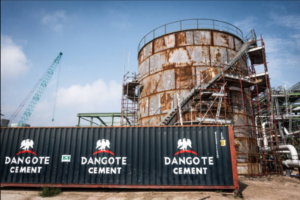
Dangote Cement Leads Market Turnover as ASI Surges Past 146,000, Up 42% YTD

  • dollaers
  • October 10, 2025
  • Business
  • 0 comments

The Nigerian Exchange continued its bullish momentum on October 9, 2025, as the All-Share Index (ASI) climbed 485.2 points to close at 146,204.3. This marks a 0.33% gain from the previous session’s 145,719.1 and solidifies an impressive year-to-date return of 42.05%. Despite a slowdown in overall market activity, investor sentiment remained positive, driven largely by heavyweight stocks, particularly Dangote Cement.

Market capitalization mirrored the index’s rise, closing at approximately ₦92.79 trillion across 24,691 deals. The achievement reaffirms the market’s resilience and continued investor confidence, especially in large-cap equities that have underpinned the rally through most of the year.

However, trading momentum moderated compared to the previous session. Total volume traded stood at 346.9 million shares, declining from 525.6 million. While lower turnover may signal cautious repositioning by investors, value-driven trades remained substantial, with institutional interest heavily concentrated in a few blue-chip stocks.

Dangote Cement Dominates in Value

Dangote Cement emerged as the most influential stock of the session, not only contributing to market stability but also leading the value chart with transactions worth ₦11 billion. The company’s stock appreciated by 1.89%, reinforcing its status as a bellwether equity. Dangote Cement’s strong participation was instrumental in lifting the broader market, particularly the industrial goods sector, which has been pivotal to recent index gains.

Other high-value tickers, including Nestlé Nigeria and MTN Nigeria, followed with ₦5.09 billion and ₦4.93 billion respectively in trade value. Aradel Holdings recorded ₦1 billion, while Fidelity Bank closed the top value list with ₦861.5 million.

Top Gainers and Losers

The session produced notable price movements, with significant advances among mid-cap stocks. EUNISELL and Caverton topped the gainers’ chart, each hitting the maximum allowable daily increase of 10%. EUNISELL closed at ₦44.00, while Caverton ended at ₦6.93. Other strong performers included SUNU Assurance (+9.90% to ₦5.77), International Medical Group (IMG) (+9.10% to ₦35.95), and Mecure Industries (+8.81% to ₦28.40).

On the losing end, FTN Cocoa Processors declined by 6.67% to ₦5.60, emerging as the day’s highest laggard. Tantalizer fell 3.35% to ₦2.31, followed by Fidelity Bank (-2.38% to ₦20.50), PZ Cussons (-2.18% to ₦38.15), and Veritas Kapital (-1.90% to ₦2.06). The downward pressure on these stocks underscored pockets of profit-taking, even as the broader market advanced.

Most Active Stocks by Volume

Fidelity Bank led activity by volume, exchanging 42 million shares. It was followed closely by Dangote Cement with 20.9 million shares, reflecting strong institutional interest. Sterling Financial Holdings moved 19.8 million shares, while Jaiz Bank and Chams Holdings completed the top five with 19.4 million and 17.6 million shares respectively.

The presence of both banking and industrial giants on the activity charts illustrated the mixed-sector participation driving current market performance.

Performance of SWOOTs and Tier-One Banks

Stocks Worth Over One Trillion Naira (SWOOTs)—major blue-chip companies with substantial market capitalization—had a mixed outing. International Breweries gained 2.19%, continuing its recent turnaround. Dangote Cement added 1.89%, Nigerian Breweries rose 1.10%, Stanbic IBTC advanced 0.93%, Lafarge Africa climbed 0.70%, and MTN Nigeria managed a marginal increase of 0.02%. In contrast, BUA Cement slipped 0.63%, lagging behind its sector peers.

In the banking sector, tier-one lenders, commonly referred to as FUGAZ (Fidelity, UBA, GTCO, AccessCorp, Zenith), showed mostly positive sentiment. Guaranty Trust Holding Company (GTCO) advanced 1.06%, First Bank Holding Company (FirstHoldCo) gained 0.32%, and Zenith Bank added 0.29%. Access Holdings (AccessCorp) declined 0.76%, while United Bank for Africa (UBA) dipped 0.35%. The mixed performance reflects selective buying within the sector, influenced by dividend positioning and expectations for upcoming earnings releases.

Market Outlook

The Nigerian All-Share Index has firmly re-established its bullish trajectory, surpassing the 145,000 and 146,000 thresholds in quick succession. Sentiment remains buoyed by strong performances in high-cap stocks, ongoing corporate earnings releases, and sustained macroeconomic optimism.

Analysts suggest that the resilience of industrials and consumer goods, alongside renewed interest in the banking sector, could further support the rally. However, the decline in trading volume signals that investors may be adopting a more strategic approach, anticipating periods of consolidation after consecutive gains.

In the near term, attention will be focused on upcoming third-quarter financial reports, central bank policy cues, and global commodity price trends—all key variables with potential influence on market direction.

Institutional investors are expected to remain active, particularly in fundamentally strong equities. Retail participation may continue to fluctuate, influenced by short-term price swings and profit-taking opportunities.

Conclusion

October 9, 2025’s trading session reinforced the Nigerian market’s upward momentum, with gains led by major industrials such as Dangote Cement. The index’s 42.05% year-to-date growth highlights growing investor confidence and renewed capital market vibrancy. While moderate trading volumes indicate caution, strong value trades suggest that long-term investors remain engaged.

The balance between profit-taking and accumulation will likely define upcoming sessions. If current sentiment endures, the ASI may soon test new historic levels, supported by blue-chip stability, sector rotation, and macroeconomic improvements.

As earnings season approaches, market participants are poised for further equity revaluation, particularly in companies demonstrating solid financial performance and sustainable dividend potential.

Coca-Cola System Leads Circular Economy Dialogue at the 31st Nigerian Economic Summit in Abuja

  • dollaers
  • October 9, 2025
  • Business
  • 0 comments

At the ongoing 31st Nigerian Economic Summit (NES) in Abuja, the Coca-Cola System showcased its commitment to sustainable industrial practices by sponsoring an impactful session on circular economy solutions. The event, titled “Driving Industrialisation through Circular PET Packaging: Unlocking Nigeria’s Green Economy,” gathered leading policymakers, government officials, and industry experts to discuss the transformative potential of circular packaging in advancing Nigeria’s environmental and industrial goals.

The session, sponsored by Nigerian Bottling Company (NBC), part of the Coca-Cola Hellenic Beverage Company (CCHBC), highlighted the critical role of circular economy principles in driving Nigeria’s green economy. Key speakers at the event included senior figures from government and industry, such as Senator John Owan Enoh, the Minister of State for Industry, Trade, and Investment; Hon. Shehu Wada Sagagi, the Commissioner for Commerce and Investment in Kano State; and a panel of distinguished thought leaders.

Senator Enoh Applauds Coca-Cola’s Leadership in Recycling Initiatives

During the keynote address, Senator John Owan Enoh praised the Coca-Cola System’s ongoing commitment to sustainable practices, particularly in the area of packaging recovery and recycling. He emphasized that initiatives like Coca-Cola’s nationwide recycling efforts were pivotal to advancing a circular economy in Nigeria. Enoh also commended the company’s role in creating new industrial opportunities while protecting the environment.

“In January of this year, I visited the Nigerian Bottling Company’s packaging waste collection hub in Apapa,” Senator Enoh remarked. “The efforts undertaken there, along with the National Automotive Design and Development Council’s End-of-Life Vehicle Regulation, are concrete examples of how the private sector can align with government policies to foster both sustainability and industrial growth. Coca-Cola’s work is a shining example of what can be achieved when innovation meets responsibility.”

The Minister also noted that the government was working diligently to create an enabling environment for the recycling and green manufacturing sectors. He pointed out that the traditional “produce, consume, discard” industrial model was outdated and that circular economy solutions could turn what was once considered waste into valuable economic opportunities. This, he argued, would drive the creation of new industries and significantly contribute to Nigeria’s green economic transition.

Panel Discussion Explores Circular PET Packaging and Industrial Growth

Following the keynote address, the session moved into a fireside chat, where the Minister was joined by other experts in a panel discussion. Notable participants included Hon. Shehu Wada Sagagi, Commissioner at the Ministry for Commerce & Investment, Kano State; Engr. (Dr.) Bahijjahtu Abubakar, Director of the Department of Pollution Control and Environmental Health at the Federal Ministry of Environment; and several other senior officials.

The discussion focused on the growing role of sustainable packaging solutions in Nigeria’s industrialization process, with a special focus on polyethylene terephthalate (PET) packaging. PET, often used in beverage containers, is recyclable and can be part of a circular economy model, where used materials are returned to the production cycle rather than being discarded. The panel also explored how circularity could create jobs, reduce environmental impact, and boost the local economy.

The Coca-Cola System’s role in the circular economy was particularly emphasized, with the company showcasing its network of collection hubs across Nigeria. Through these hubs, Coca-Cola is working to collect and recycle the equivalent of every bottle and can it sells, thus fostering a more sustainable production cycle.

Collaboration for Sustainable Growth

The Coca-Cola System’s commitment to advancing circularity in Nigeria is part of its broader global sustainability goals. The company continues to build partnerships with local communities, governmental bodies, and other industry stakeholders to promote recycling and circular economy initiatives across the country.

In her remarks, Amaka Onyemelukwe, Senior Director of Public Affairs, Communications, and Sustainability at Coca-Cola Nigeria, emphasized the company’s strategy to engage with communities at the grassroots level. Through various recycling programs, educational campaigns, and collaborations with environmental organizations, Coca-Cola is ensuring that sustainability is woven into the fabric of Nigerian society.

“The circular economy is about more than just environmental impact; it’s about creating a new, sustainable industrial ecosystem that benefits everyone. We believe that by working together with governments, industry, and communities, we can build a future where waste is minimized, and valuable resources are reused and recycled,” Onyemelukwe said.

Shaping the Future of Nigeria’s Green Economy

The session at the 31st Nigerian Economic Summit exemplifies the growing interest in circular economy solutions as key drivers of sustainable industrial growth. With increasing emphasis on green manufacturing practices, Nigeria has the potential to become a regional leader in sustainable economic development. By adopting circularity in packaging, the country can create new jobs, reduce waste, and foster a cleaner, more sustainable environment.

In closing, NBC’s Soromidayo George, Corporate Affairs and Sustainability Director, highlighted the importance of continued collaboration between the public and private sectors. “Sustainability and industrial growth must go hand in hand. By integrating circular economy principles into our production and consumption systems, we can unlock the full potential of Nigeria’s green economy.”

The 31st Nigerian Economic Summit continues to serve as a critical platform for dialogue between key stakeholders working to transform Nigeria’s industrial and economic landscape for a greener, more sustainable future.

Nigeria, Delta State, and Orteva Launch $100 Million Carbon Project to Boost Green Growth

  • dollaers
  • October 8, 2025
  • Business
  • 0 comments

The Federal Government of Nigeria has partnered with Orteva, Delta State, and Eighth Versa to roll out a $100 million carbon development initiative aimed at accelerating the country’s transition to a sustainable, low-carbon economy.

The project, announced on Tuesday in Abuja by the Minister of Finance and Coordinating Minister of the Economy, Wale Edun, marks a significant milestone in Nigeria’s effort to integrate climate finance into its broader economic reform strategy.

According to a statement released by the Federal Ministry of Finance, the collaboration seeks to unlock climate-related investments, generate high-integrity carbon credits, and drive environmental conservation while creating new economic opportunities for Nigerians.

Driving Nigeria’s Energy Transition and Green Economy

Minister Edun hailed the project as a “timely intervention” that supports President Bola Ahmed Tinubu’s vision for green growth and inclusive economic transformation.

He explained that large-scale climate-focused projects like this are essential to Nigeria’s Energy Transition Plan (ETP), which aims to diversify revenue sources, reduce dependency on fossil fuels, and strengthen foreign exchange earnings through the carbon economy.

“With components spanning mangrove conservation, biochar production, and renewable energy, the Orteva Carbon Project is projected to generate between $350 million and $2.8 billion in carbon credit revenue,” Edun stated. “This positions Nigeria to become one of Africa’s key players in the global carbon trading market.”

FG Reaffirms Commitment to Climate Finance and Transparency

The Federal Government has reiterated its resolve to establish a transparent, well-regulated carbon market anchored on robust governance and clear pricing frameworks.

“The Federal Government is committed to building a transparent carbon market with strong governance and predictable pricing mechanisms,” Edun emphasized. “For the private sector, this project represents a pathway to invest in climate solutions that protect the planet and deliver long-term financial value.”

He added that the government would provide the necessary policy, fiscal, and credit-enhancement frameworks to ensure that both local and international investors can participate in a secure, profitable, and well-governed carbon market.

The Finance Ministry described the Orteva initiative as a symbol of Nigeria’s new economic frontier — one where sustainability and profitability align to power national development.

Expanding Nigeria’s Carbon Market Potential

Nigeria has intensified its efforts to position itself as a continental leader in climate finance and carbon trading. In April 2025, President Tinubu announced the Carbon Market Activation Policy, a national framework expected to unlock up to $2.5 billion in verified carbon credits and green investments by 2030.

The policy, unveiled during a high-level UN climate dialogue co-hosted by UN Secretary-General António Guterres and Brazilian President Luiz Inácio Lula da Silva, forms part of Nigeria’s broader commitment to updating its Nationally Determined Contributions (NDCs) under the Paris Agreement.

Path to a Sustainable Economic Future

The Orteva Carbon Project reflects Nigeria’s shift toward an economy driven by innovation, sustainability, and global climate partnerships. Beyond environmental benefits, the project is expected to create thousands of green jobs, strengthen rural economies, and attract climate-focused investors seeking credible carbon assets from Africa.

By combining government policy, private-sector expertise, and regional collaboration, the initiative sets the foundation for what Edun described as “a future where climate action and economic growth move hand in hand.”

  • dollaers
  • October 6, 2025
  • Business
  • 0 comments

Nigeria’s consumer goods sector has rebounded strongly in the first half of 2025, marking one of its best performances in recent years. After battling inflation, foreign exchange instability, and weak consumer demand in 2024, many of the country’s top consumer goods firms have turned the corner with impressive profitability and operational resilience.

Sector Recovers from Turbulence

The listed consumer goods companies on the Nigerian Exchange (NGX) collectively recorded a sharp rise in profitability between January and June 2025. The turnaround was driven by tariff adjustments, cost optimization, and improved foreign exchange stability, which together boosted margins and restored investor confidence in the sector.

While inflation remains a challenge for most producers, improved pricing power and supply chain efficiencies helped major players achieve robust top-line and bottom-line growth.

BUA Foods Leads the Pack

BUA Foods Plc emerged as Nigeria’s most profitable consumer goods company in H1 2025, posting an exceptional ₦260.07 billion profit after tax (PAT). The company’s dominance reflects its strong market share in sugar, flour, and packaged foods, coupled with economies of scale that shielded it from input cost volatility.

With its vertically integrated operations, BUA Foods continues to benefit from self-sufficiency in raw materials and an expanding export base, consolidating its position as one of Nigeria’s most stable blue-chip manufacturers.

Brewers Return to Profitability

The brewing segment staged one of the most dramatic recoveries in the sector. Nigerian Breweries Plc, which suffered heavy losses in 2024, returned to a ₦88.42 billion profit in H1 2025, thanks to strategic price revisions, cost controls, and the integration of Distell Nigeria.

Similarly, International Breweries Plc delivered strong revenue and profit growth, securing the third spot on the profitability list. Both companies benefited from resilient consumer demand for alcoholic beverages and a revival in on-trade sales during festive periods.

Resilient Mid-Tier Players Show Promise

Beyond the industry giants, mid-sized and smaller firms also delivered encouraging results. Vitafoam Nigeria Plc, Champion Breweries Plc, and Northern Nigeria Flour Mills Plc (NNFM) reported solid earnings growth and improving returns on equity despite operating in niche markets.

These firms have leveraged localized production, efficient distribution, and targeted pricing to protect margins amid intense competition. NNFM, for example, recorded a ₦1.80 billion PAT in H1 2025, nearly doubling its ₦966 million result from the same period in 2024.

With revenue of ₦21.09 billion and a net margin of 9%, NNFM’s financials highlight its ability to convert limited scale into meaningful profitability. The company’s earnings per share (EPS) stood at ₦10.11, and its price-to-earnings (P/E) ratio of 9.26x indicates a relatively undervalued stock compared to its peers.

Winners and Laggards

While the top 10 list is dominated by strong performers, several legacy players are still struggling to regain momentum. Companies such as Dangote Sugar Refinery, PZ Cussons Nigeria, Guinness Nigeria Plc, and Honeywell Flour Mills Plc posted losses during the period.

Analysts attribute their underperformance to high production costs, FX exposure, and weak consumer spending in certain categories. Nevertheless, their ongoing restructuring efforts and investments in backward integration could yield positive outcomes in the second half of the year.

Sector Outlook: Resilience Amid Headwinds

The first half of 2025 has proven that Nigeria’s consumer goods industry remains resilient even in tough economic conditions. The sector’s rebound demonstrates the effectiveness of corporate adaptation strategies — from cost management to product diversification and market repositioning.

With inflation beginning to moderate and the exchange rate showing signs of stability, analysts expect continued improvement in profitability into 2026.

According to market watchers, the sector’s recovery will likely strengthen further if consumer purchasing power improves and the government sustains policy consistency in fiscal and trade management.

Key Takeaway

Nigeria’s consumer goods companies have shown that profitability is achievable even in a challenging macroeconomic environment. BUA Foods, Nigerian Breweries, and International Breweries lead the charge, but emerging players like Vitafoam and NNFM prove that operational efficiency and prudent financial management can deliver strong returns at any scale.

As the sector continues to evolve, investors are likely to keep a close eye on the next earnings cycle — one that could define which firms sustain momentum and which fall behind in Nigeria’s increasingly competitive consumer market.

Below is a glimpse of how the top performers fared and who made the cut.

Sector Recovery: Margin Gains and Select Winners

Several companies leveraged tariff adjustments, improved foreign exchange stability, and operational efficiencies to widen margins and boost bottom lines. Many recovered from deep 2024 losses, while smaller firms like Vitafoam, Champion Breweries, and Northern Nigeria Flour Mills (NNFM) posted sharp earnings gains. Some legacy names, however—Dangote Sugar Refinery, PZ Cussons, Guinness Nigeria, Honeywell Flour Mills—continued to post losses, reflecting uneven recovery.

The Top 10 Profitable Consumer Goods Players in H1 2025

Here are the Top 10 listed consumer goods firms by Profit After Tax (PAT) in H1 2025 (from least to highest):

Rank Company Approx PAT / Remarks
10. Northern Nigeria Flour Mills Plc Recorded ₦1.80 billion PAT (up from ₦966 million in H1 2024), with revenue of ₦21.09 billion. Net margin ~9%.
9. Champion Breweries Plc Strong recovery among the breweries segment, showing improved efficiency and narrowing losses.
8. Vitafoam Nigeria Plc Solid rebound in foam and mattress business, aided by better input sourcing and demand uptick.
7. Cadbury Nigeria Plc Benefited from strong confectionery sales and improved cost control amid volatile raw material pricing.
6. Unilever Nigeria Plc Recovered via stable brand portfolio, price adjustments, and rebalanced product mix.
5. NASCON Allied Industries Plc Gains from seasoning and food business, driven by pricing power and local sourcing.
4. International Breweries Plc Notable return to profitability in the brewing sector, supported by volume recovery and margin expansion.
3. Nestlé Nigeria Plc Strong performance in food and beverage brands, leveraging premium positioning and stable demand.
2. Nigerian Breweries Plc Recovered from 2024 losses to post a strong PAT, aided by Distell integration and cost optimization.
1. BUA Foods Plc Dominated the list with ₦260.07 billion PAT, cementing its leadership in food, sugar, flour, and allied segments.

What This Tells Us

  • Scale and diversification matter: BUA Foods’ dominance reflects strong vertical integration and a broader product mix that buffered it from volatility.

  • Rebound with discipline: Brewers and food firms that survived 2024 did so via pricing, tightening costs, and protecting margins.

  • Room for mid-tier growth: Companies like NNFM and Vitafoam, while smaller in scale, are proving that niche players can deliver solid returns with the right strategy.

  • Continued headwinds for some: Even with sector momentum, some legacy consumer goods names remain under pressure, highlighting that recovery is still uneven.

Continue Reading

Nigerian Breweries Posts Strong Comeback, Generates Over ₦738 Billion in Half-Year Revenue

  • dollaers
  • October 6, 2025
  • Business
  • 0 comments

Nigerian Breweries Plc (NB), one of Nigeria’s oldest and largest brewers, has recorded a major turnaround in its 2025 half-year financial results, reporting strong revenue growth and a return to profitability after a turbulent 2024.

The company announced a ₦738.14 billion revenue in the first half of 2025, representing a 53.85% surge from ₦479.77 billion posted during the same period last year. The brewer also moved from a ₦85.2 billion loss in H1 2024 to a ₦88.42 billion profit after tax in H1 2025 — a swing of more than ₦170 billion within a year.

According to its financial statements, the company has already achieved about 68% of its 2024 full-year turnover, positioning it for one of its strongest fiscal years in recent history.

Growth Fueled by Revenue Strength and Cost Discipline

Nigerian Breweries’ recovery was driven by a combination of higher sales volumes, strategic price adjustments, and improved cost management. Revenue climbed steadily throughout the second quarter, reaching ₦354.51 billion, while gross margins expanded to 42.13%, supported by slower growth in cost of sales (up 33.45% year-on-year).

The brewer also benefited from a sharp decline in finance costs following its rights issue in 2024, which helped reduce foreign currency exposure and interest payments. These improvements have created room for better cash generation and operational efficiency.

Beyond Beer: A Broad Beverage Empire

While best known for iconic lagers such as Star, Gulder, and Heineken, Nigerian Breweries has evolved into a diversified beverage powerhouse. Its product lineup now includes Legend Stout, Amstel Malta, Fayrouz, and an expanding portfolio of wines and spirits through the acquisition of Distell Nigeria in March 2025.

The company distributes across multiple channels — retail markets, on-trade outlets like bars and restaurants, and off-trade distributors — giving it unmatched reach and brand loyalty across the country.

This diversity has been a strategic advantage, allowing NB to defend market share and pass through price increases even in a high-inflation environment.

Where the Billions Come From

NB’s robust revenue performance reflects resilient demand for alcoholic and non-alcoholic drinks amid improving consumer confidence.

Key financial highlights for H1 2025 include:

  • Revenue: ₦738.14 billion, up 53.85% year-on-year

  • Gross Profit: ₦310.99 billion, reflecting a 94.76% increase

  • Operating Profit: ₦151.9 billion, with a 20.6% margin

  • Profit After Tax: ₦88.42 billion, reversing a prior-year loss

The company attributes the growth to price adjustments, strong festive season sales, and the successful integration of Distell Wines & Spirits Nigeria, which broadened its premium product offering.

Competition and Market Position

Despite growing competition, Nigerian Breweries remains the largest player in Nigeria’s beer market. In comparison, International Breweries reported ₦340.99 billion in revenue in H1 2025, while Guinness Nigeria recorded ₦259.6 billion — both reflecting healthy sectoral growth but still far behind NB in scale and distribution reach.

How the Brewer Spends Its Billions

In the first half of 2025, Nigerian Breweries maintained a disciplined approach to cash deployment:

  • ₦31.1 billion invested in property, plant, and equipment

  • ₦116.84 billion used for debt repayment

  • ₦43.8 billion paid in taxes to government

  • ₦19.65 billion in net finance costs, a significant drop from ₦154.48 billion in H1 2024

The company also recorded a ₦7.32 billion foreign exchange gain, reversing the massive losses it faced the previous year, while maintaining cash reserves of ₦77.7 billion.

Creating Value for Stakeholders

Nigerian Breweries’ operations directly benefit thousands across its value chain. Over 3,000 employees receive wages, pensions, and benefits; government revenues rise through taxes and excise duties; and shareholders gain from stronger retained earnings and a healthier equity base of ₦549.5 billion, up from ₦463.9 billion a year earlier.

The brewer’s steady investment in equipment, debt reduction, and innovation signals a clear strategy for long-term stability and expansion.

Outlook: Brewing Confidence for the Future

Analysts say NB’s 2025 half-year performance underscores its resilience in navigating Nigeria’s volatile economic environment. By tightening cost controls, deleveraging its balance sheet, and expanding its beverage mix, the company has positioned itself to sustain profitability even in challenging conditions.

If the growth trajectory continues through the second half, Nigerian Breweries could surpass its 2024 performance and further consolidate its leadership in the country’s fast-moving consumer goods sector.

With stronger fundamentals and a revitalized product portfolio, the brewer appears ready to keep Nigeria’s favorite drinks — from beers to malts and spirits — flowing across bars, homes, and markets nationwide.

Over 1.4 Million Nigerian Farmers Now Covered by Agricultural Insurance – NAICOM

  • dollaers
  • October 6, 2025
  • Business
  • 0 comments

Nigeria’s agricultural sector is witnessing a major boost in financial protection, as more than 1.47 million smallholder farmers across the country are now covered under various agricultural insurance schemes, according to the National Insurance Commission (NAICOM).

The development marks a critical step in de-risking agriculture, protecting farmers from climate and market shocks, and positioning insurance as a key driver of productivity and food security.

Expanding Insurance Coverage for Farmers

Speaking at the 2025 Stakeholders’ Retreat of the House Committee on Insurance and Actuarial Matters in Maiduguri, the Commissioner for Insurance and NAICOM Chief Executive Officer, Olusegun Omosehin, said the coverage expansion was largely achieved through the Nigeria Incentive-Based Risk Sharing System for Agricultural Lending (NIRSAL).

Omosehin disclosed that NIRSAL’s agricultural insurance initiative aims to reach 3.6 million farmers by 2026, with significant progress already recorded across multiple states.

“In the second quarter of 2025 alone, over 250,000 farmers were insured across eight states under various federal agricultural insurance schemes,” he said. “To date, 1.47 million smallholder farmers have been covered under NIRSAL’s agricultural insurance programmes, and we are on track to reach 3.6 million by next year.”

Insurance as a Catalyst for Productivity

Omosehin highlighted how insurance is beginning to transform the dynamics of agricultural production in Nigeria, particularly by enabling farmers to take more informed risks and recover faster from losses.

In the North Central region, for example, insured rice farmers recorded an 11% increase in productivity compared to their uninsured peers, averaging 20 bags per hectare versus 18.

He also cited success stories from Kaduna State, where ginger farmers received compensation under the NAGS-AP scheme after losing over 90% of their harvest due to extreme weather conditions.

“Agriculture remains the backbone of Nigeria’s rural economy, yet it is also one of the most vulnerable sectors to climate shocks, floods, and pest outbreaks,” Omosehin said. “Insurance provides a vital safety net that allows farmers to invest confidently and recover quickly when disruptions occur.”

Beyond crops, NAICOM noted that livestock and encroachment insurance in Sokoto, Bauchi, Adamawa, and Plateau States has helped reduce farmer-herder conflicts—one of the most persistent challenges threatening Nigeria’s agricultural stability.

Strengthening the Regulatory Framework: NIIRA 2025

Omosehin used the occasion to emphasize the importance of the Nigerian Insurance Industry Reform Act (NIIRA) 2025, describing it as a landmark piece of legislation that modernizes the country’s insurance framework and enhances regulatory effectiveness.

He called on lawmakers and government agencies to collaborate closely with NAICOM to ensure the full implementation of compulsory insurance provisions and promote compliance across ministries, departments, and agencies (MDAs).

“The NIIRA 2025 law has been enacted, but the real work is just beginning,” he stated. “We need the support of the National Assembly to ensure alignment between federal and state policies, strengthen enforcement, and raise awareness about compulsory insurance obligations.”

According to him, the new law consolidates decades of fragmented legislation into a single, modern legal framework designed to empower regulators, protect consumers, and drive innovation in the sector.

Key Provisions of NIIRA 2025

Signed into law by President Bola Tinubu in August 2025, the NIIRA introduces sweeping reforms aimed at repositioning Nigeria’s insurance industry for global competitiveness and supporting the administration’s vision of a $1 trillion economy.

The Act introduces stricter capital requirements for insurers and reinsurers, mandatory enforcement of compulsory insurance across critical sectors, and digitization mandates to improve service delivery and data integrity.

It also strengthens NAICOM’s authority to supervise and regulate all insurance and reinsurance operations in the country, ensuring higher standards of transparency and accountability.

Looking Ahead

As Nigeria grapples with the twin challenges of food insecurity and climate risk, NAICOM’s expansion of agricultural insurance is emerging as a strategic lifeline for millions of farmers.

With nearly 1.5 million already covered and a goal to more than double that number by 2026, the Commission believes insurance will become a cornerstone of national agricultural policy—helping farmers transition from subsistence to commercial production while ensuring stability and growth in the wider economy.

“If we get agricultural insurance right,” Omosehin concluded, “we will unlock unprecedented productivity, safeguard livelihoods, and build resilience in one of Nigeria’s most critical sectors.”

Nigeria’s Active Oil Rigs Hit 69 as NUPRC Reports Strong Industry Rebound

  • dollaers
  • October 6, 2025
  • Business
  • 0 comments

Nigeria’s oil and gas industry is experiencing a strong comeback, with the number of active drilling rigs rising to 69 as of October 2025, up from just eight in 2021, according to new data from the Nigerian Upstream Petroleum Regulatory Commission (NUPRC).

The sharp increase, the regulator said, reflects renewed investor confidence in Nigeria’s upstream petroleum sector and signals that government reforms and regulatory transparency are beginning to yield tangible results.

Reforms Driving Investor Confidence

Marking its fourth anniversary, the NUPRC highlighted how its policies have transformed the nation’s upstream environment into one that prioritizes efficiency, accountability, and investment growth.

In a statement by Eniola Akinkuotu, Head of Media and Strategic Communication, the Commission noted that the rise in rig activity aligns with President Bola Tinubu’s call for renewed investor engagement and reflects a more stable operational environment.

“This growth clearly demonstrates renewed investor confidence in Nigeria’s oil and gas industry,” the statement read. “The trend is expected to continue upward as more companies ramp up drilling and exploration activities.”

“Drill or Drop” Policy Enforcing Accountability

One of the Commission’s key initiatives—the ‘Drill or Drop’ policy—has been instrumental in enforcing asset utilization across the sector.
The policy, introduced under the Petroleum Industry Act (PIA) 2021, mandates that companies must either actively explore their licensed acreages or relinquish them.

NUPRC said it has so far identified over 400 dormant oil fields under this framework and pushed companies to take swift action to avoid losing undeveloped assets. This approach, the agency emphasized, ensures optimal use of Nigeria’s hydrocarbon resources and reduces speculation in asset holding.

Billions in Divestments and New Regulations

To consolidate transparency and modernization, the NUPRC has developed 24 regulatory frameworks, with 19 already gazetted and five awaiting final approval.
These rules are designed to improve investor confidence, align Nigeria’s operations with international standards, and remove bureaucratic bottlenecks.

The Commission also oversaw several multi-billion-dollar divestments in 2024, including deals involving Agip, Equinor, Mobil, and Shell, as global oil majors shifted focus toward deepwater projects while local firms expanded onshore operations.
Among them were transactions such as Agip’s sale to Oando Energy Resources, and Shell’s divestment to Renaissance Africa Energy, which the Commission described as part of an ongoing portfolio realignment in the industry.

Tackling Gas Flaring and Boosting Community Development

The regulator also highlighted major progress in reducing gas flaring through the Nigerian Gas Flare Commercialisation Programme (NGFCP), which has attracted up to $2.5 billion in new investments.
NUPRC confirmed that awards for several flare sites have been completed, marking a critical milestone toward environmental sustainability and cleaner energy adoption.

On the community front, the Host Community Development Trusts (HCDTs)—a key PIA initiative—have received over ₦122 billion and $168 million, translating to more than ₦358 billion in total contributions.
These funds are financing over 500 community projects across Nigeria, including schools, hospitals, roads, and vocational centers.

The Commission noted that the initiative has also reduced crude oil theft by 90%, from 102,900 barrels per day in 2021 to just 9,600 barrels per day in September 2025.
It credited this to coordinated efforts between the security agencies, private contractors such as TANTITA, and the Commission’s oversight.

Strengthening Transparency and Safety Oversight

The NUPRC emphasized its commitment to transparency through digital transformation and open licensing rounds.
It described the latest bid round as the most transparent in Nigeria’s history, conducted entirely through digital platforms and free from political interference—a development confirmed by the Nigeria Extractive Industries Transparency Initiative (NEITI).

In addition, the Commission announced that it had revoked the license of the Oritsemeyin Rig after a drilling incident at the UDIBE-2 well raised safety concerns. The decision followed investigations into the “kick” incident that disrupted operations and caused significant downtime.

A New Era for Upstream Growth

With a record 69 active rigs, increasing investments, and new regulatory clarity, Nigeria’s upstream sector appears to be entering a new era of sustained growth.
For the NUPRC, these gains underscore its broader mission—to make Nigeria a top destination for oil and gas investment while promoting accountability, transparency, and environmental responsibility.

10 Global Nigerians Redefining Success with Multimillion-Dollar Ventures

  • dollaers
  • October 5, 2025
  • Business
  • 0 comments

Across the world’s leading financial capitals—from London and New York to Los Angeles and Lagos—Nigerians in the diaspora are quietly reshaping the global business landscape. These entrepreneurs have built multimillion-dollar companies that not only compete internationally but also redefine what it means to export Nigerian excellence.

Their ventures span industries as diverse as fintech, fashion, infrastructure, and consumer goods. Beyond profit, their work represents a new wave of influence—one powered by innovation, resilience, and the fusion of Western business systems with African creativity.

From Migration to Global Impact

For decades, migration stories often centered around brain drain and remittances. Today, that narrative has changed dramatically. The Nigerian diaspora has become a global force for wealth creation, channeling intellectual, financial, and technological capital into ventures that rival established international brands.

This generation of founders demonstrates that Nigeria’s entrepreneurial energy knows no borders. Through smart partnerships and bold leadership, they are building bridges between continents—proving that being Nigerian is not a limitation but a global advantage.


Alexander Amosu — The Visionary Behind Lux Afrique

Leading this global wave is Alexander Amosu, a British-Nigerian entrepreneur and creative pioneer whose career embodies innovation and persistence. Born in London to Nigerian parents, Amosu began his entrepreneurial journey at a young age, identifying unique cultural and market opportunities long before they became mainstream.

At just 24, Amosu made his first fortune through Rnbringtones, Europe’s first urban ringtone company. The business catered primarily to the Black community, filling a gap in the mobile entertainment market and quickly becoming a multimillion-pound success. Within three years, the company was generating nearly £10 million in annual revenue. Amosu later sold it for the same amount, capitalizing on the market’s peak.

But his ambitions extended beyond digital media. He ventured into luxury design, founding a brand that became synonymous with exclusivity and craftsmanship. Amosu created bespoke, diamond-encrusted devices for top brands such as Apple, Motorola, and BlackBerry. His most famous creation, the Amosu Call of Diamond iPhone 6, was valued at $2.75 million, featuring 18-karat gold and over 6,000 VVS1 diamonds.

Today, Amosu leads Lux Afrique, a pan-African luxury and concierge company that connects high-end global brands with Africa’s wealthiest clientele. Through curated experiences like the Lux Afrique Polo Day, the brand celebrates African affluence, elegance, and culture while bridging the gap between international luxury and the continent’s growing elite market.

The Rise of a Global Nigerian Identity

The achievements of Amosu and other diasporan entrepreneurs reveal a powerful transformation: Nigeria’s reputation abroad is no longer defined solely by migration but by innovation and wealth creation. These individuals are changing global perceptions by proving that Nigerian business excellence can thrive anywhere.

Their success stories reflect not just personal triumphs but the evolution of a nation’s global identity. As they expand their companies, invest in new ventures, and mentor future leaders, these entrepreneurs continue to show that Nigeria’s greatest export is not oil or minerals—it’s talent.

This movement represents the next chapter of Nigeria’s economic story: one written not just in Lagos or Abuja, but in every global city where Nigerians are redefining what’s possible.

  • ‹ Previous
  • 1
  • …
  • 6
  • 7
  • 8
Forgot Password
Please enter your email address or username below.
*
 
Login
*
*
Lost Your Password
Dont have account? Signup
 
 
0