Creator
  • Type:
  • Genre:
  • Duration:
  • Average Rating:
Log In
 
  • Marketplace
Log In
 
  • Type:
  • Genre:
  • Duration:
  • Average Rating:
  • Marketplace

Trump’s $100,000 H-1B Visa Fee Faces Legal Challenge from Unions and Employers

  • dollaers
  • October 4, 2025
  • Finance
  • 0 comments

A coalition of U.S. unions, universities, and business groups has filed a federal lawsuit challenging President Donald Trump’s recent executive order imposing a $100,000 fee on new H-1B visas for highly skilled foreign workers.

The legal action, filed in San Francisco federal court on Friday, marks the first major challenge to the controversial measure, which critics say unlawfully alters a congressionally established immigration program and threatens innovation in key U.S. industries.

Lawsuit Targets Trump’s Immigration Fee Order

The lawsuit, brought by the United Auto Workers (UAW), the American Association of University Professors (AAUP), a nurse recruitment agency, and several religious organizations, argues that the new rule exceeds presidential authority and effectively transforms the H-1B program into a “pay-to-play” system.

They contend that the Immigration and Nationality Act, which governs the H-1B program, does not give the president the power to impose new fees or taxes, a responsibility reserved for Congress.

“The Proclamation transforms the H-1B program into one where employers must either ‘pay to play’ or seek a ‘national interest’ exemption,” the lawsuit states, warning that the policy invites selective enforcement and potential corruption.

Trump’s $100,000 Visa Fee Explained

The executive order, signed on September 19, 2025, requires U.S. employers sponsoring new H-1B visa holders to pay an additional $100,000 before the foreign worker can enter the country. The policy does not apply to existing visa holders or applications filed before September 21.

Under current rules, H-1B sponsoring companies typically pay between $2,000 and $5,000 in processing and compliance fees, depending on their size and number of foreign hires.

The administration defended the steep new fee as part of a broader effort to discourage “system abuse” and to ensure that only firms with genuine skill shortages use the visa program.

White House spokeswoman Abigail Jackson said the policy aims to “discourage companies from spamming the system and driving down American wages, while providing certainty to employers who need to bring the best talent from overseas.”

A Longstanding Debate Over Skilled Immigration

The H-1B visa allows U.S. employers to hire foreign professionals in specialized fields, such as technology, engineering, medicine, and academia. The program currently allocates 65,000 visas annually, plus an additional 20,000 for applicants with advanced U.S. degrees.

Tech giants and universities have long relied on H-1B workers to fill skill gaps, particularly in science and engineering disciplines. However, critics — including labor advocates and some policymakers — argue that the system enables outsourcing firms to replace American workers with lower-paid foreign labor.

President Trump has repeatedly claimed that the program undermines U.S. workers and national security. In his latest proclamation, he cited “the large-scale replacement of American workers” and said the influx of lower-wage visa holders “discourages Americans from pursuing careers in science and technology.”

Legal Experts Question Presidential Authority

Legal analysts say the case could become a major test of the limits of executive power over immigration policy.

The plaintiffs argue that Trump’s order violates the U.S. Constitution’s separation of powers, asserting that the president cannot unilaterally impose financial obligations that effectively act as taxes or revenue measures.

They also claim that the Department of Homeland Security and State Department implemented new visa rules without proper regulatory procedures or consideration of the economic impact.

By bypassing formal rulemaking, the lawsuit says, the administration ignored the potential for “stifling innovation” in sectors that depend heavily on global talent.

Implications for U.S. Businesses and Global Talent

The new $100,000 fee could sharply curtail participation in the H-1B program, particularly among smaller firms and startups that depend on specialized international labor but lack the capital of large corporations.

Business coalitions have warned that the measure will make it harder for U.S. employers to remain competitive globally, especially in fields like artificial intelligence, software engineering, and healthcare, where skilled labor shortages persist.

According to government data, India accounts for about 71% of H-1B visa recipients each year, with China following at around 12%. The policy, therefore, could disproportionately affect Indian tech professionals and U.S. companies with large Indian workforces.

Broader Immigration Strategy

Trump’s executive order on H-1B visas was announced alongside the rollout of a new “Trump Gold Card,” which grants permanent residency to foreign nationals who invest $1 million in the United States. The two measures are part of a broader effort to reshape U.S. immigration policy to favor wealthy investors over skilled workers.

As the case moves forward, the outcome will likely determine how far the executive branch can go in restructuring employment-based immigration without congressional approval — a question that could have lasting implications for the future of America’s high-skilled workforce.


BOA Secures $1 Billion Afreximbank Partnership to Boost Nigeria’s Agricultural Financing

  • dollaers
  • October 4, 2025
  • Bank, Finance
  • 0 comments

The Bank of Agriculture (BOA) has entered into a landmark $1 billion financing partnership with the African Export-Import Bank (Afreximbank) to expand credit access and modernise the country’s agricultural sector, particularly for smallholder farmers.

The agreement was formalised during the recently concluded Intra-African Trade Fair (IATF) 2025 in Algiers, Algeria, and is designed to strengthen Nigeria’s agricultural value chain from production to processing and export.

Unlocking Capital for Smallholder Farmers

The initiative aims to provide direct financial support and equipment financing for smallholder farmers who currently contribute more than 90% of Nigeria’s agricultural output but face persistent challenges, including limited access to capital, outdated technology, and poor market integration.

“This is more than just a fund; it is a bold commitment to ensuring our nation’s food security,” said Ayo Sotinrin, the newly appointed Managing Director and Chief Executive Officer of BOA. “By joining forces with Afreximbank, we are unlocking opportunities for smallholder farmers to move beyond subsistence farming into sustainable and profitable agribusiness.”

Reducing Credit Risk Through Guarantees

Under the agreement, Afreximbank will provide loan guarantees for credit disbursed by BOA, reducing risk exposure and expanding financing to previously underserved farmers. The partnership also introduces a currency swap arrangement, converting Afreximbank’s dollar-denominated funds into local currency for lending — helping shield farmers from exchange rate volatility.

Both institutions said the framework will improve access to international capital markets while ensuring that financing remains stable and affordable for rural producers.

Supporting National Food Security Goals

The $1 billion programme aligns closely with President Bola Tinubu’s administration’s National Smallholder Farmers Fund, a new initiative that establishes a revolving food security fund in collaboration with state governments. The fund seeks to close Nigeria’s agricultural financing gap by offering affordable loans for inputs, mechanisation, and market development.

Transforming the Bank of Agriculture

The BOA, jointly owned by the Federal Ministry of Finance Incorporated and the Central Bank of Nigeria, is Nigeria’s primary development finance institution for agriculture and rural development. Established in 1972, the bank has a mandate to promote agricultural productivity, rural job creation, and financial inclusion.

The recent leadership change — with Sotinrin’s appointment by President Tinubu — is part of broader efforts to reposition BOA as a modern, technology-driven, and commercially viable agricultural finance institution capable of delivering large-scale impact.

Afreximbank’s Expanding Regional Role

Afreximbank, which co-organised the IATF alongside the African Union Commission and the African Continental Free Trade Area (AfCFTA) Secretariat, described the 2025 trade fair as its most successful to date. The event attracted over 112,000 participants both online and on-site and facilitated more than $48 billion in trade and investment deals across Africa.

According to Afreximbank, partnerships like the BOA agreement exemplify the kind of cross-border collaboration needed to realise the continent’s agricultural and trade potential.

A Step Toward Sustainable Agribusiness

For Nigeria, the deal signals renewed momentum in transforming agriculture into a commercially sustainable, technology-driven sector. With fresh leadership, international backing, and alignment with national policy goals, the Bank of Agriculture appears set to play a central role in financing the country’s next agricultural revolution.

What ₦50 Million Can Really Do for You in 2025

  • dollaers
  • October 4, 2025
  • Finance
  • 0 comments

Every few months, a familiar question resurfaces among young professionals in Nigeria: If you had ₦50 million in cash today, would you relocate abroad or invest at home?

It’s not a simple choice. ₦50 million, roughly $34,000, can either serve as a launchpad for a new life overseas or as seed capital for a business venture in Nigeria. But how far it goes depends entirely on how—and where—you use it.

What ₦50 Million Buys You Abroad

In many Western countries, $34,000 can buy you valuable time and options. It could cover tuition while you work part-time, help you buy a modest car outright, or serve as your emergency cushion while building a new life.

However, as financial analyst Kalu Aja points out, savings alone don’t last long in economies built on systems and steady income. Surviving solely on $34,000, or even $100,000, without a job or trade is unrealistic. The key is to convert that money into earning power—through certification, education, or a marketable skill.

Labour Is Gold in the West

In the West, labour commands high value. Aja illustrates this with a striking example: fixing a split air conditioning unit cost his friend $24,000—$2,200 for the unit itself, and a staggering $20,000 for labour.

Jobs often dismissed as “menial” in Nigeria—plumbing, electrical work, hairdressing, truck driving—can yield solid middle-class incomes abroad. Aja even jokes that it might be cheaper to fly a skilled technician from Aba to the US to do the repair.

The point is clear: Western economies reward skilled hands and certified expertise. Those who master a trade or get licensed can thrive quickly.

When the Problem Isn’t the Country—But the Career

Many Nigerians struggle abroad because their professional titles don’t translate. A banker from Ikoyi might discover that without Western certification, their skills don’t command the same value. Meanwhile, a plumber or auto mechanic can build a profitable small business within months.

That’s why Aja urges aspiring emigrants to first invest in skills at home—spending perhaps ₦1 million on apprenticeship or training—before relocating.

Smart Skills That Travel

According to Aja, valuable trades include:

  • Hairdressing

  • Teaching and childcare

  • Nursing

  • Information Technology

  • Plumbing, carpentry, and electrical work

  • Auto mechanics and truck driving

Professional certifications such as CFA, CFP, or CPA also add value for those seeking white-collar opportunities.

The Demographic Advantage

The West is aging fast. The U.S., for example, had 7.4 million job openings as of mid-2025. Countries with declining birth rates need young, skilled migrants to sustain their economies. Those who move legally, armed with relevant skills, are well-positioned to benefit.

Plan Before You Pack

Still, Aja cautions against emotional or impulsive relocation. Emigration requires structure—research, budgeting, and clear goals. He advises:

  • Move when you’re young and flexible.

  • Relocate as a couple without kids if possible.

  • Pursue education first, then employment.

  • Choose the U.S. over Canada, the EU, or the UK if economic opportunity is your focus.

The Bottom Line

Kalu Aja isn’t pushing anyone to leave or stay. His message is simple: if you decide to go, go prepared. Whether you invest your ₦50 million locally or abroad, the outcome depends less on geography and more on planning, adaptability, and skill.

In the end, the money isn’t the real advantage—you are.

Naira Strengthens to N1,455/$ as Market Confidence Builds

  • dollaers
  • October 3, 2025
  • Finance
  • 0 comments

Local Currency Records Strongest Rally of 2025

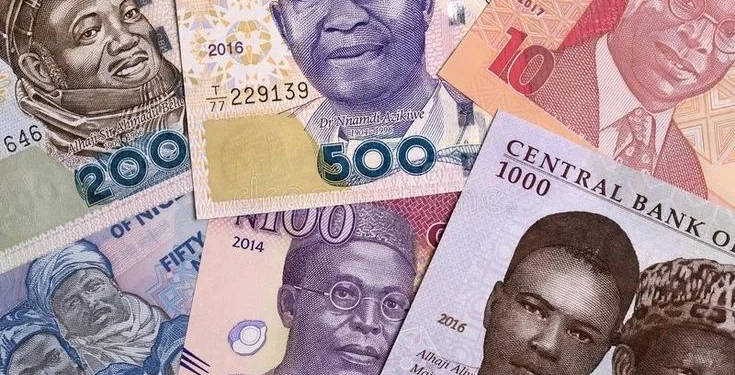
The naira appreciated to N1,455 per U.S. dollar in the official Nigerian Foreign Exchange Market (NFEM), extending its upward momentum and signaling renewed confidence in the domestic currency.

Trading data showed that while the official market closed at N1,455/$, parallel market rates hovered slightly higher at N1,460/$ to N1,470/$. This stability contrasts sharply with the sharp depreciations witnessed earlier in 2025, highlighting the positive effects of recent reforms and stronger capital inflows.

Analysts Credit Reforms and Rising Reserves

Market analysts point to multiple drivers behind the naira’s gains. Chief among them are reduced speculative activities in the FX market and an increase in Nigeria’s external reserves, which climbed to $43 billion in September from $40.51 billion two months earlier.

The Central Bank of Nigeria (CBN)’s policy reforms — including stricter FX regulations, interventions through authorized dealers, and inflows from International Oil Companies (IOCs) and Foreign Portfolio Investors (FPIs) — have boosted liquidity and tempered volatility.

Foreign investor confidence is also improving. With better adherence to FX rules and more transparent processes, portfolio inflows are rising, providing the market with much-needed support.

CBN Governor Reaffirms Strength in Fundamentals

CBN Governor Yemi Cardoso noted that gross external reserves remain strong with over eight months of import cover, signaling a solid buffer for future market pressures.

“In a similar vein, the current account balance for the second quarter of 2025 recorded a significant surplus of $5.28 billion, compared with $2.85 billion in the first quarter,” Cardoso added, emphasizing Nigeria’s improving external position.

The Governor also reaffirmed the apex bank’s commitment to sustaining reforms that ensure transparency, strengthen liquidity, and reduce reliance on speculative trading in the FX market.

Global Dollar Weakness Adds Tailwinds

The naira’s rally is being supported by global conditions as well. The U.S. Dollar Index (DXY), which measures the dollar against a basket of major currencies, slipped to 97.9, extending its bearish run.

This weakness comes as the U.S. economy faces uncertainty due to a federal government shutdown, which has delayed critical macroeconomic data such as the September Nonfarm Payrolls report. The shutdown has forced over 700,000 federal employees into potential furloughs, raising fiscal risks for Washington.

At the same time, weaker-than-expected U.S. labor market data has fueled speculation that the Federal Reserve may implement additional rate cuts before the end of the year. Markets are pricing in a 90% chance of a December cut, alongside a 25-basis-point reduction expected in October.

Outlook: Stability but Risks Remain

For Nigeria, the naira’s current strength reflects both improved domestic fundamentals and favorable external dynamics. However, analysts caution that sustaining the rally will require consistent reforms, stable oil revenues, and careful management of speculative demand.

If reserves continue to grow and foreign inflows remain steady, the currency could hold its ground into the final quarter of 2025. For now, the naira’s performance marks a significant shift from the turbulence seen earlier in the year and offers cautious optimism for businesses and investors alike.

Flutterwave Backs Stablecoins as Africa’s Next Big Fintech Shift

  • dollaers
  • October 3, 2025
  • Fintech
  • 0 comments

Flutterwave’s founder and CEO, Olugbenga “GB” Agboola, is placing a strong bet on stablecoins, framing them as the backbone of Africa’s next financial transformation. Speaking at Money 20/20 Middle East and the Fluidity 2025 summit in Riyadh, Agboola said the company’s focus is shifting toward making stablecoin payments a mainstream tool for businesses and individuals across the continent.

According to him, the time is right for Africa to take this leap. The continent’s youthful, digitally savvy population has already powered a $1 trillion mobile money economy, and that same demographic is now fueling the adoption of stablecoins. “Africa’s youth are early adopters, digital natives, and entrepreneurial by nature,” Agboola told the audience, describing them as the driving force behind fintech innovation.

Youth at the Heart of Africa’s Digital Finance Growth

The CEO argued that Africa’s young population is not just a demographic advantage but a core driver of global financial change. He tied stablecoin adoption directly to this group, pointing to Nigeria, South Africa, Ethiopia, and Kenya as markets where young entrepreneurs and consumers are leading the shift.

“Africa’s youth demographic is a dividend that requires proactive support from all stakeholders,” he said. “The continent’s economic growth is directly tied to the success of its young people.” Agboola drew a clear line between the mobile money boom of 2024, valued at over $1 trillion, and the current surge in stablecoin transactions.

Building Infrastructure for Tomorrow’s Money

To support this trend, Flutterwave is rolling out new tools and integrations aimed at reducing friction in payments. The company previewed enhancements to the Flutterwave Dashboard, which will make cross-border business payments simpler and faster. Its Send App is also being upgraded to streamline remittances for individuals and families across Africa.

Beyond products, Flutterwave is forging partnerships that embed it more deeply into the global financial system. The company is a founding member of the Circle Payments Network for USDC stablecoins and has struck a deal with Global Remit to enable stablecoin conversions for cross-border transfers.

Agboola described these moves as part of Flutterwave’s vision to build “Africa’s largest infrastructure for tomorrow’s money,” ensuring businesses and consumers can transact seamlessly in digital currencies.

Positioning in Global Policy and Partnerships

Flutterwave is also strengthening its voice in global fintech policy debates. In Riyadh, Agboola joined a roundtable on the G20 Cross-Border Payments Targets and spoke on panels moderated by leaders such as Nicole Valentine, FinTech Director at the Milken Institute.

He also engaged in discussions on public-private partnerships alongside Kashifu Inuwa Abdullahi, Director General of Nigeria’s National Information Technology Development Agency (NITDA). These appearances highlight Flutterwave’s strategy of shaping both the technology and the policy environment for Africa’s digital future.

From Mobile Money to Stablecoins

Stablecoins, according to Agboola, are the logical next step in Africa’s fintech evolution. They promise faster, cheaper, and more reliable cross-border payments, particularly in regions where currency volatility and transaction costs remain barriers to growth. By reducing friction for entrepreneurs, securing remittances, and enabling seamless trade, stablecoins could replicate — and surpass — the impact of mobile money.

For Flutterwave, this isn’t just about betting on a trend. It is about embedding itself at the heart of Africa’s financial infrastructure at a time when the world is rethinking money. With a young population eager for digital-first solutions, Agboola believes stablecoins can help power Africa’s next trillion-dollar opportunity.

CBN Data Show Rising Liquidity, Shrinking Government Borrowing

  • dollaers
  • October 3, 2025
  • Finance
  • 0 comments

Nigeria’s financial system witnessed major shifts in August 2025, with broad money (M3) expanding strongly even as government borrowing dropped sharply by 25.74% year-on-year, according to new data from the Central Bank of Nigeria (CBN).

Broad Money Jumps to N119.52 Trillion

M3 rose to N119.52 trillion, driven largely by stronger quasi-money balances and increased foreign assets. The growth signals rising liquidity in the system despite tight monetary conditions.

  • Quasi-money surged to N80.21 trillion, showing households and firms are moving funds into interest-bearing deposits.

  • Narrow money (M1), made up of cash in circulation and demand deposits, stood at N39.30 trillion. The relatively smaller size suggests Nigerians prefer keeping funds in banks rather than in physical currency.

Government Borrowing Contracts Sharply

Credit to government fell to N23.13 trillion, reflecting a steep 25.74% decline YoY. This shows less liquidity is being channeled toward deficit financing.

Meanwhile, credit to the private sector stayed modest at N75.83 trillion, indicating that rising liquidity is not fully translating into stronger lending to businesses or economic investment.

Economic Consequences of the Shift

The divergence between liquidity expansion and weaker government borrowing comes with mixed effects:

  • Private sector credit remains weak – despite high liquidity, banks are cautious, limiting business loans and job-creating investments.

  • Households shift to safer assets – more deposits are held in interest-bearing accounts rather than being spent, reducing consumption-driven growth.

  • Reduced fiscal push – lower borrowing implies fewer government projects, slowing public-sector-led growth.

  • Liquidity from abroad – net foreign assets rose to N40.94 trillion, but external inflows do not always feed into domestic credit for productive sectors.

Money and Credit Dynamics

  • Net domestic assets stood at N78.58 trillion.

  • Net domestic credit totaled N98.97 trillion, with the drop in government credit offset by private-sector balances.

  • Currency outside banks fell slightly by 0.92% to N4.45 trillion, though still 15.12% higher YoY.

  • Base money reached N35.68 trillion, dominated by bank reserves (N30.76 trillion) over physical cash.

This pattern shows liquidity growth is concentrated in bank balances, consistent with the CBN’s push toward a cash-lite economy.

CBN Policy Adjustments

At its September 2025 MPC meeting, the CBN fine-tuned its tools:

  • Reduced the Cash Reserve Ratio (CRR) for commercial banks from 50% to 45%.

  • Introduced a 75% CRR on non-TSA public sector deposits to sterilize idle government funds.

  • Adjusted the Standing Facilities corridor to +250/-250 basis points around the MPR, making overnight liquidity management more predictable.

Meanwhile, CBN bills issuance dropped by 14.01% in two months and 13.33% YoY to N9.29 billion, reflecting a cautious approach to liquidity sterilization. Special intervention reserves stayed at N284.36 billion, maintaining support for agriculture and small businesses.

Why It Matters

Nigeria’s money supply is expanding, but the contraction in government borrowing and modest private credit mean liquidity growth is not driving broad economic expansion. Businesses still face limited access to loans, household spending remains subdued, and public projects may slow.

In short, Nigeria’s financial system is becoming more liquid on paper, but unless funds flow into productive sectors, the broader economy will feel little impact.

Who Owns Union Bank and Who Will Recapitalise It? – The Untold Backstory

  • dollaers
  • October 3, 2025
  • Bank
  • 0 comments

This article follows up on Titan Trust and Union Bank: A Deal, A Reversal, and the Regulator. Inside Business, a partner resource, provides this detailed reply and perspective. (Note: sensitive documents such as agreements and audited accounts have been excluded).

From Atlas Mara to Titan Trust: How the Trouble Began

Union Bank of Nigeria’s journey took a sharp turn after Atlas Mara—the African investment firm co-founded by Bob Diamond—sold its controlling stake to Titan Trust Bank (TTB) in 2022.

  • Atlas Mara first entered Union Bank in 2014, buying 20.9% from AMCON.

  • By 2018, it had raised its stake to 49%.

  • In December 2021, Atlas Mara and other major shareholders (including Union Global Partners) sold a combined 93.41% stake to Titan Trust Bank.

The deal, completed in June 2022, made Tropical General Investments (TGI) Ltd, linked to Dubai-based Vink Corporation and Cornelius G. Vink, the ultimate majority shareholder of TTB.

By November 2022, Titan Trust executed a Mandatory Takeover Offer for all remaining shares. In May 2023, a scheme of arrangement forced out minority shareholders, paving the way for Union Bank’s delisting from the Nigerian Stock Exchange in November 2023.

The CBN Investigation and Ownership Questions

The Union Bank takeover coincided with President Bola Tinubu’s appointment of Jim Obazee in July 2023 as Special Investigator into alleged corruption at the CBN and related agencies.

Obazee soon raised doubts about:

  1. Titan Trust Bank’s capacity to finance the Union Bank acquisition.

  2. The true owners and source of funding behind the deal.

Unable to verify the funding trail—particularly the alleged $190m equity by Cornelius Vink and Rahul Savara—Obazee recommended that government seize control.

By January 2024, President Tinubu approved the takeover. The CBN became the sole owner of Union Bank.

Lemo, Vink, and Savara: Missing in Action

  • Tunde Lemo, TTB’s chairman, forfeited his own stake and proposed that government take over Vink and Savara’s holdings after they repeatedly failed to appear before investigators.

  • Cornelius Vink and Rahul Savara, both based in Dubai, ignored multiple invitations, citing medical and family reasons through their lawyers.

  • Despite promises via legal counsel (G. Elias Chambers), neither man has appeared before investigators since August 2023.

Interestingly, none of the parties has gone to court to challenge the federal takeover. Even Afreximbank, which reportedly provided a $300m facility for the acquisition, has stayed silent.

New Management, Old Questions

In January 2024, the federal government dissolved Union Bank’s board and appointed an interim management team led by:

  • Yetunde Oni (Managing Director)

  • Mannir U. Ringim (Executive Director)

Later, the CBN reconstituted a new board with:

  • Bayo Adeleke (Chairman)

  • Four independent non-executive directors: Oluyinka Abimbola Morgan, Chiamaka Ezenwa, Mohammed Balarabe, and Eileen C. Shaiyen

  • Two new executive directors: Taiwo Shote and Kelechi Nwaoba

  • Ringim retained from the interim team

But this raised another concern: Whose interests do these new appointees represent? Are they proxies for Vink, Savara, and Lemo—or truly government choices?

The Big Question: Who Will Recapitalise Union Bank?

The CBN has directed all banks to raise fresh capital by March 2026. With Union Bank now fully under government control, Nigerians are asking:

  • Will the new appointees recapitalise the bank?

  • Or will the federal government itself step in as the ultimate backer?

For now, the ownership and future of one of Nigeria’s oldest banks remain uncertain, political, and deeply entangled in controversy.

The story of Union Bank is no longer just about banking—it’s about power, politics, and accountability in Nigeria’s financial system.

CBN Introduces Major Reforms to Nigerian Fixed Income Market: Settlement to Shift to FMDA Infrastructure

  • dollaers
  • October 3, 2025
  • Finance
  • 0 comments

Abuja, Nigeria – October 3, 2025 — In a landmark move to modernize the Nigerian financial system, the Central Bank of Nigeria (CBN) has announced a phased implementation of sweeping operational reforms within the Nigerian Fixed Income Market. These reforms are designed to enhance market transparency, improve operational efficiency, and establish a more robust regulatory framework, while aligning the market with global best practices.

The initiative marks a significant shift in the country’s financial infrastructure. As part of the reform, the CBN will assume direct oversight of the fixed income trading platform and end-to-end settlement operations, bringing them under the apex bank’s control. This change, the CBN said, is crucial to strengthening the integrity of the fixed income market, which plays a vital role in facilitating capital formation, managing public debt, and supporting monetary policy transmission in Nigeria.

According to the CBN, the goal of this strategic transition is to create a unified market structure where all fixed income transactions—from trade execution to final settlement—are supervised within a central regulatory ecosystem. The Bank said this will not only increase transparency and reduce settlement risks but also enhance investor confidence and deepen market participation.

In its official communication, the CBN stated, “This reform is an integral part of our ongoing efforts to reposition the Nigerian financial markets. We aim to foster a more transparent, efficient, and resilient fixed income ecosystem capable of supporting economic growth and the smooth transmission of monetary policy.”

The reform will be executed in phases to ensure stability and avoid disruption in the market. The implementation plan includes rigorous testing, stakeholder engagement, and a staged rollout of new infrastructure.

The key milestones of the first phase include:

  • User Acceptance Testing (UAT): Scheduled for the second week of October 2025, UAT will involve comprehensive testing of the new settlement process to ensure functionality, security, and operational readiness.

  • Pilot Phase: Upon successful completion of UAT, a pilot phase will run alongside the current structure. This allows for gradual adaptation and minimizes operational risks during the transition.

  • Go-Live 1 – Settlement Process Migration: If the pilot phase proves successful, the CBN will officially migrate all fixed income settlement processes to its internal system on November 3, 2025.

  • Go-Live 2 – Trading Platform Activation: The final step will see the activation of the new CBN-sponsored trading platform, with all trading activities involving Primary Dealers, Market Makers (PDMMs), Pension Fund Administrators (PFAs), and other authorized participants moving to the new environment starting December 1, 2025.

The Central Bank has reaffirmed its commitment to working closely with key stakeholders throughout the transition. In particular, the Bank acknowledged the contributions of the Financial Markets Dealers Association (FMDA) in the development of the country’s financial markets and emphasized the need for strong collaboration moving forward.

“We recognize the pivotal role of market participants, including the FMDA, and we expect full cooperation as we implement this important reform. Our goal is to ensure that the fixed income market operates on a modern, transparent, and efficient foundation,” the Bank said.

These changes form part of the broader financial market reforms being championed by the CBN to reposition Nigeria as a competitive investment destination. The central bank emphasized that the implementation will be carried out in a structured and coordinated manner to prevent disruptions and to protect the interests of all market participants.

Stakeholders with inquiries or those seeking clarification are encouraged to contact:

Dr. Okey Umeano
Acting Director, Financial Markets Department
📧 oumeano@cbn.gov.ng

dollaers commission rate

Dollaers Earnings Commission in %

  • dollaers
  • March 4, 2024
  • Videos
  • 0 comments

Earnings Commission Charges Percentage for Members and FREE Members. These are the amount we will charge from your balance before processing and paying your final earnings to you. Members tend to take home more share of their earnings than FREE Members

Continue reading

Music On

  • dollaers
  • January 30, 2024
  • Videos
  • 0 comments
  • ‹ Previous
  • 1
  • …
  • 59
  • 60
  • 61
  • 62
  • 63
  • Next ›
Forgot Password
Please enter your email address or username below.
*
 
Login
*
*
Lost Your Password
Dont have account? Signup
 
 
0